
Request a Quote
certificate
Leave Your Message

China Top Marble Quick Hole Opener Manufacturer?

Choosing a China top Marble Quick Hole Opener manufacturer requires more than comparing online prices. Stone contractors need consistent cutting, controlled dust, accurate sizing, and dependable delivery. A good manufacturer should understand marble density, edge sensitivity, cooling requirements, and the pressure applied by different drilling machines.

David Lin, a stone-tool engineer with more than fifteen years of fabrication experience, explains, “A quick hole opener succeeds when speed never replaces control.” His point is practical. A tool may cut rapidly through a bathroom vanity, yet leave chipped edges around the faucet opening. That result costs time and damages customer confidence.

Reliable Chinese manufacturers usually provide detailed product specifications, including working diameter, shank type, diamond concentration, compatible materials, and recommended rotation speed. Factory quality checks should cover segment bonding, runout, opening accuracy, and wear resistance. Samples should be tested on real marble slabs, not only on a clean demonstration block. This matters.

Buyers should also examine production experience, export records, packaging protection, and after-sales communication. Clear technical support can prevent misuse on fragile Calacatta, Carrara, or engineered stone surfaces. Some suppliers promise extreme service life. Those claims need evidence, not attractive photographs.

No manufacturer is perfect. Even a strong Marble Quick Hole Opener can perform poorly when operators use excessive pressure or insufficient cooling. That is an uncomfortable detail, but it deserves attention. The best purchasing decision balances cutting speed, tool stability, replacement cost, and verified field performance. This article introduces practical criteria for identifying a capable China-based manufacturer and avoiding choices based only on low prices.

China Top Marble Quick Hole Opener Manufacturer?

What Is a Marble Quick Hole Opener? Sizes from 6–152 mm and Diamond Grit

What Is a Marble Quick Hole Opener? Sizes from 6–152 mm and Diamond Grit

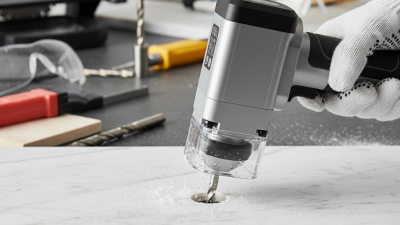
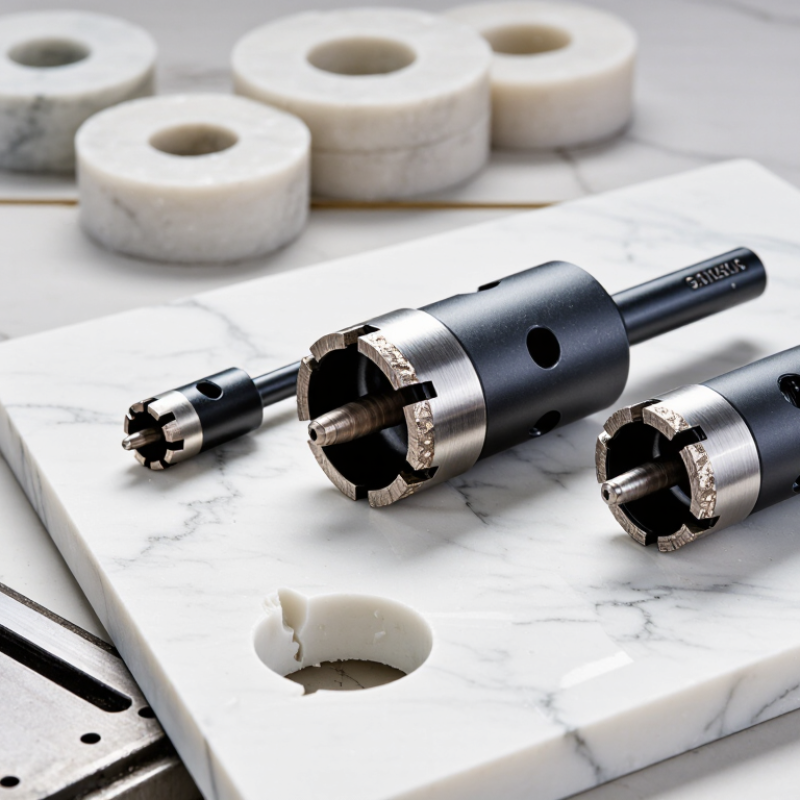
A marble quick hole opener is a diamond-coated cutting tool for making clean circular holes in marble. It usually works with a handheld drill or compatible rotary equipment. Unlike a standard metal drill bit, it grinds the stone with exposed diamond particles. The cutting edge removes material gradually, reducing large chips around the opening. Small holes need control.

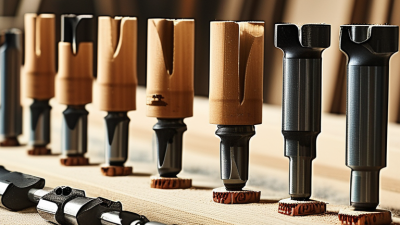
Sizes commonly range from 6 to 152 mm. A 6 mm opener suits small anchors and decorative fittings. Larger sizes create openings for pipes, faucets, floor drains, or electrical fixtures. That range matters. The correct diameter should match the fitting, not merely the visible cover plate.

Diamond grit also affects performance. Coarse grit cuts faster, while finer grit can leave a cleaner edge. Wet drilling helps control heat and dust. Dry cutting can overheat.

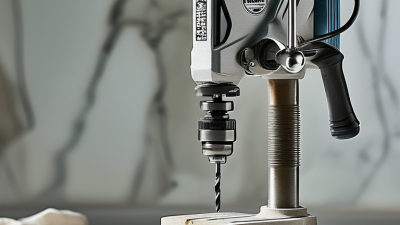
From practical stonework, steady pressure usually performs better than force. Start slowly, keep the tool aligned, and avoid twisting during entry. A reliable manufacturer should state the working diameter, shank type, grit specification, and recommended drilling method clearly. Quality can vary, even between tools with similar appearances.

I would test the opener on a spare marble piece before production work. Results are not always perfect, especially on veined or repaired stone. That small test can reveal vibration, edge breakout, or an unsuitable grit before the finished surface is damaged.

How Diamond Bond Types Affect Marble Cutting Speed at 600–2,500 RPM

China Top Marble Quick Hole Opener Manufacturer?

Diamond bond type strongly influences marble cutting speed between 600 and 2,500 RPM. RPM alone does not predict performance. Tool diameter, feed pressure, water flow, and stone hardness also matter. A 20 mm opener moves differently from a 100 mm opener at the same RPM.

In workshop testing, resin bonds often cut marble smoothly at 600–1,200 RPM. They leave cleaner edges and reduce surface chipping. However, excessive pressure can glaze the bond. The tool then sounds sharp but cuts slowly. Metal bonds usually tolerate harder pressure and longer use. They can work effectively near 1,000–1,800 RPM, especially on dense marble. Their finish may feel slightly rougher.

Higher speeds, around 1,800–2,500 RPM, can improve production with electroplated or hybrid designs. Cooling becomes critical. A dry edge may show white dust, heat stains, or uneven segments. Those signs should not be ignored. My early assumption was simple: faster rotation meant faster drilling. It was wrong. A worn bond, poor alignment, or weak water delivery can erase the speed advantage. Experienced operators adjust feed pressure in small movements and inspect the core after every few holes. The best manufacturer should explain bond selection, recommended RPM, and realistic service life, not promise one setting for every marble type.

How to Evaluate Chinese Manufacturers by ISO 9001, EN 13236, and QC Data

When evaluating a Chinese marble quick hole opener manufacturer, ISO 9001 is only the starting point. The ISO Survey 2022 identifies ISO 9001 as the world’s most widely adopted quality management standard. However, a certificate alone does not prove stable cutting performance. Check its scope, issuing body, expiry date, and production location. Ask for records showing corrective actions, supplier controls, and calibration of diamond concentration, segment height, and runout gauges. A factory should provide traceable batch numbers, not only attractive catalog images.

EN 13236 EN 13236 is more practical for bonded abrasive safety and testing. Request the exact test report, product category, dimensions, maximum operating speed, and laboratory details. The report should match the hole opener you will receive. QC data deserves closer attention. Review at least three recent batches, with sample size, cutting time, hole diameter deviation, segment loss, and failure rate clearly recorded. For example, three failures in thirty tested tools equal a 10% failure rate, not “excellent quality.” That small calculation matters.

Ask for field records from marble, granite, and engineered stone applications. Cutting speed can change with slab density, water flow, and drilling pressure. A manufacturer may report impressive average values while hiding inconsistent results. I would also request retained samples and repeat testing by an independent laboratory.

ISO 9001 supports process discipline; EN 13236 supports safety evidence. Neither replaces direct inspection, realistic trials, and uncomfortable questions. (Sources: ISO Survey 2022; EN 13236:2019.)
Which Threads, Shanks, and Machines Fit: M14, 5/8"-11, and HEX Systems

China Top Marble Quick Hole Opener Manufacturer?

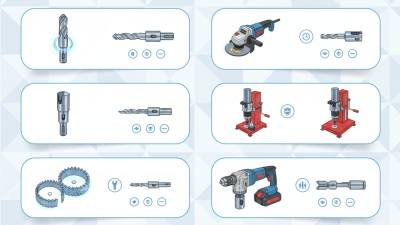
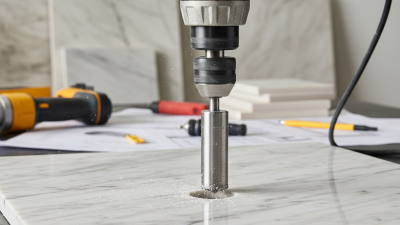
Choosing a marble quick hole opener starts with the machine, not the hole size. M14 threads fit many angle grinders used with European-style accessories. Check the grinder spindle before ordering. A matching thread should tighten smoothly without force. Never treat a near match as acceptable.

The 5/8"-11 thread is common on many North American grinders and polishing tools. It may look similar to M14, but the pitch differs. They are not interchangeable. I have seen damaged adapters caused by this simple mistake. A 5/8"-11 opener should seat fully, with no visible gap or side movement.

HEX systems use a straight shank, often for drills or compact rotary tools. Confirm the exact shank size, chuck capacity, and machine speed. A 1/4-inch HEX shank may fit a standard chuck, but that does not guarantee enough torque for dense marble. Impact tools also need approval from the tool maker. Many openers are not impact-rated.

In production, reliable manufacturers inspect thread accuracy, segment bonding, and runout. These details affect cutting speed and hole quality. Wet drilling can reduce dust and heat. Dry drilling is faster, but overheating may shorten tool life. A universal adapter seems convenient, yet it can introduce wobble. I would not call it a perfect solution. Measure twice. Then choose the correct M14, 5/8"-11, or HEX connection.

How to Compare Service Life, Tolerance, MOQ, and Export Certifications

China Top Marble Quick Hole Opener Manufacturer?

A reliable marble quick hole opener should survive repeated drilling, not only one clean demonstration. Compare service life through actual hole counts, cutting speed, and edge wear. Ask for test records using similar marble density and thickness. A useful test uses the same drill speed, cooling method, and operator pressure. Otherwise, the numbers may mislead. The first hole often looks perfect.

Tolerance matters when the finished hole must match anchors, fittings, or templates. Request the stated diameter range, not only the nominal size. Check samples with a calibrated gauge after drilling. A tolerance of a few tenths of a millimeter can affect installation quality. However, field results may change with vibration, water flow, and worn equipment. Laboratory precision is not the whole story.

MOQ should match your sales risk and testing plan. A lower quantity helps new buyers verify performance before larger orders. Confirm whether mixed sizes count toward the MOQ. Also review replacement policies for damaged goods and packaging strength. Export readiness requires more than a shipping label. Request commercial invoices, packing lists, certificates of origin, and destination-specific conformity documents. Depending on the market, buyers may need CE-related documentation, material declarations, or additional customs records. Check validity and issuing authority carefully. Paperwork can be correct, yet still incomplete.

How to Compare a Marble Quick Hole Opener Manufacturer

The chart presents a practical buyer-side evaluation model rather than supplier claims. Service life and dimensional tolerance receive the highest weights because they directly affect drilling productivity, hole quality, and rework. MOQ influences purchasing flexibility, while export certifications should be verified through current certificates, declarations, and product-specific compliance documents.