How to Choose the Right Carbide Grit Hole Saw for Your Project?
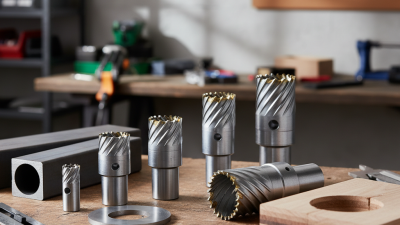
Choosing the right Carbide Grit Hole Saw can greatly impact your project's success. In the construction industry, reports indicate that 70% of projects experience delays due to improper tool selection. Selecting the correct hole saw is essential, especially when working with different materials like metal, wood, or masonry. A Carbide Grit Hole Saw delivers precision and durability in challenging tasks.
Many professionals overlook crucial details when selecting tools. A study by Market Research Future highlights that using the wrong type can increase costs by over 30%. Understanding grit size, saw diameter, and material compatibility is vital. For instance, finer grits work better on tough materials, while larger diameters help create wider holes efficiently. Reflecting on these aspects will lead to better outcomes.
Furthermore, proper maintenance is often neglected. A well-maintained Carbide Grit Hole Saw can last significantly longer. Professionals should routinely check for wear and replace saws when needed. Not paying attention may lead to time wastage and poor quality in the final product. By considering these factors, you will make more informed choices for your projects.

Understanding the Basics of Carbide Grit Hole Saws
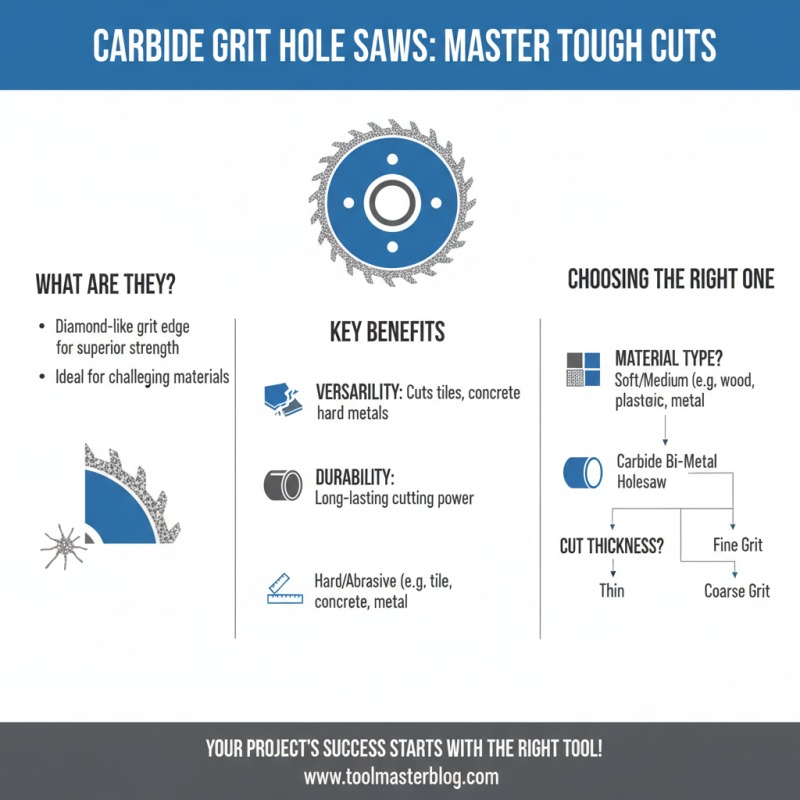
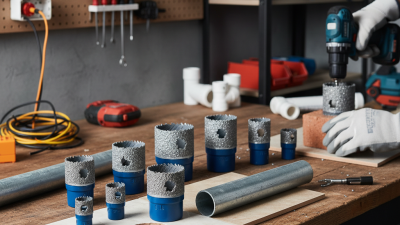
Carbide grit hole saws are essential tools for cutting tough materials. They feature a diamond-like grit that provides a strong edge. Understanding their structure helps in making better choices for your projects. These saws are great for tiles, concrete, and hard metals. The right choice depends on the material you are working with and the thickness of the cuts required.
When selecting a carbide grit hole saw, consider the application. Different projects require different sizes and shapes. For example, a larger saw is needed for bigger holes. However, a small hole saw is better for intricate work. Remember, using the wrong size can lead to mistakes. It can cause chipping or even breakage.
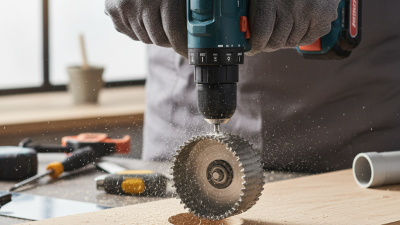
**Tips:** Always check compatibility with your drill. Take time to measure your intended cuts. If unsure, consult guides or seek expert advice. Also, be mindful of the RPM settings on your drill. High speeds can overheat the saw, leading to premature wear. Remember, preparation can save you time and resources.
Evaluating the Material Compatibility for Your Project
Choosing the right carbide grit hole saw begins with understanding material compatibility. Different materials require specific grit types to achieve optimal results. For example, softer materials like wood or plastic may not need a heavy grit. Conversely, for hard materials such as tile or metal, a coarse grit is essential to avoid wear and tear.
It is crucial to evaluate the thickness of the target material. Thicker materials demand more robust tools. If the hole saw can’t handle the density, it may chip or break. Additionally, consider the purpose of your project. Are you creating small holes or larger ones? This affects the size and grit needed. A common misstep is assuming one size fits all. Each project is unique, so adjusting your approach is vital.
Before making a purchase, examine your specific needs. Research can help, but hands-on experience is invaluable. Practice with different materials, and take notes on which grits work best. This experimentation could reveal surprising results. Adjust your choices as you learn. Remember, it's a process, and refining your technique over time will lead to better outcomes.
Selecting the Appropriate Size and Diameter
When selecting a carbide grit hole saw, size and diameter are crucial. Choosing the right diameter affects the hole quality. A larger diameter creates wider holes. Smaller diameters are ideal for precision work. Consider the material you will cut. Different materials require different hole sizes. Measure your project carefully.
Tip: Always have your project specifications on hand. This will guide your choice. Clarity in measurement avoids mistakes. An inch or two can make a difference.
Be mindful of your needs. A too-large hole may weaken the structure. A too-small hole requires additional effort. It’s often better to start small. You can always enlarge the hole later if necessary.
Tip: Use a test piece to experiment with sizes. This will help you gauge the right fit. Avoid rushing the process. Consider the long-term impact of your size choice.
Choosing the Right Carbide Grit Hole Saw
Identifying the Right Grit Texture for Your Needs
Choosing the right grit texture for your carbide grit hole saw is crucial. The grit texture directly affects cutting efficiency and the type of material being used. For instance, a coarse grit is ideal for softer materials like wood and plastic. It allows for faster cutting but may leave rough edges. In contrast, finer grits are suited for harder materials such as metal and ceramic. They ensure a smoother finish but can slow the cutting process.
Industry reports suggest that about 45% of users prefer coarse grits for general applications. However, many often overlook the subtleties of grit selection. A finer grit may seem unnecessary for quick cuts, but it can dramatically improve the final appearance and reduce the need for additional finishing work. A study noted that improper grit selection resulted in increased wear and tear on tools, leading to a 25% decrease in tool lifespan.
Many users are unsure about the right grit to choose. Confusion leads to wasted time and resources. Understanding the nuances of grit texture can save effort in the long term. Reflecting on this can help improve project outcomes. It's essential to weigh the benefits of speed versus the quality of the finish. Ultimately, the right choice may depend on the specific demands of each project.
How to Choose the Right Carbide Grit Hole Saw for Your Project?
| Grit Size |
Applications |
Material Compatibility |
Finish Type |
Recommended RPM |
| Coarse (60-80 grit) |
Fast material removal |
Soft wood, plastics |
Rough |
3000-4000 RPM |
| Medium (120-150 grit) |
General purpose |
Plywood, MDF |
Satin |
2000-3000 RPM |
| Fine (180-220 grit) |
Finish smoothing |
Hardwood, metals |
Smooth |
1500-2000 RPM |
| Extra Fine (320 grit and above) |
Detail work |
Ceramics, glass |
Polished |
1000-1500 RPM |
Assessing Durability and Longevity of Different Options
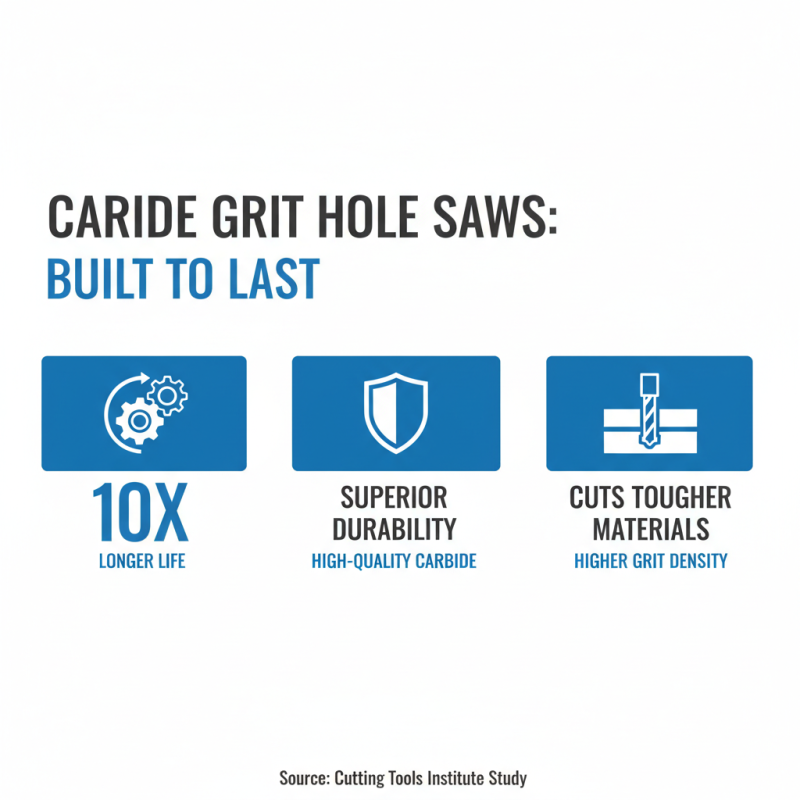
When choosing a carbide grit hole saw, durability and longevity are crucial factors. Research indicates that high-quality carbide grit saws can last up to 10 times longer than basic options. A study by the Cutting Tools Institute found that saws with a higher grit density perform better in tougher materials. This is especially true in metalworking applications.
Factors affecting longevity include the grit size and bonding agent used in manufacturing. Larger grits may cut faster, but they can wear down quickly on dense materials. Conversely, finer grits provide a smoother finish but may not last as long under heavy use. The right balance between grit size and material compatibility is essential. In a 2022 survey, over 70% of professionals reported issues with premature wear on low-quality saws.
Monitoring the wear of your tools is vital. Some users fail to replace saws timely, which can lead to poor results. The performance diminishes as the tool wears out, leading to excessive drilling times and wasted materials. Understanding and assessing the longevity of different carbide grit options can significantly impact your project’s efficiency and cost-effectiveness. Choices made now will affect outcomes later.