How to Choose the Right Stainless Steel Chisel for Your Project?
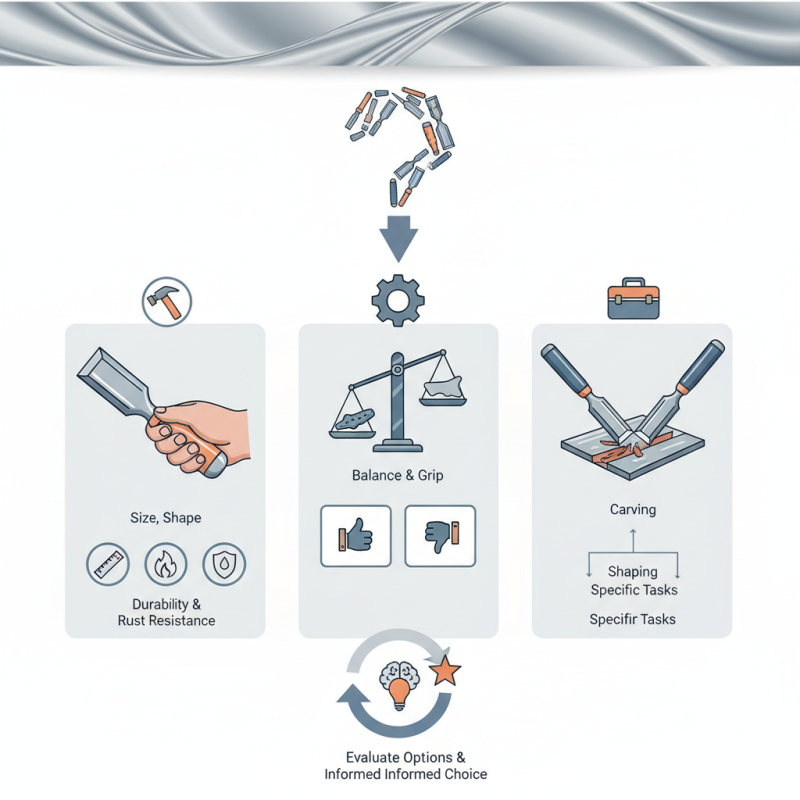
Choosing the right Stainless Steel Chisel for your project can be challenging. You may wonder which features matter most. Size, shape, and sharpness are crucial factors.
Stainless Steel Chisels are known for their durability. They resist rust and ensure longevity. However, not all chisels are created equal. Some may lack proper balance or grip. You might find a beautiful chisel but discover it isn’t practical for your work.
Consider the specific tasks you'll perform. Are you carving, shaping, or cutting? Different projects require different chisels. Investing time to evaluate options is essential. This selection process can be frustrating. But making an informed choice can lead to better results.
Understanding Different Types of Stainless Steel Chisels Available
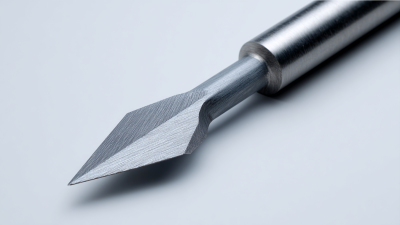
When selecting a stainless steel chisel, it's essential to understand the different types available. Generally, chisels are categorized by their blade design and intended use. The most common types include flat chisels, pairing chisels, and mortise chisels. Flat chisels are versatile and used for removing material from flat surfaces. Mortise chisels are specially designed for making deep cuts in wood. Pairing chisels are ideal for fine finishing work, offering precision control.
According to a report by the Industrial Tool Manufacturers Association, stainless steel chisels have gained popularity due to their durability and resistance to corrosion. For example, a study revealed that stainless steel chisels last 30% longer than carbon steel chisels when used in humid environments. However, many users may overlook the importance of blade hardness. A blade that is too hard can chip easily, while one that is too soft may not hold an edge. This balance is crucial for effective performance.
The materials composition also matters. High carbon stainless steel is often preferred for its strength and edge retention, but it may not be suitable for all applications. Craftsmen must consider the nature of their projects. Tools should feel comfortable in hand and suit the specific demands they face. Everyone has different experience levels; choosing the wrong type of chisel can lead to frustration. Reflecting on your needs and the materials involved is vital for achieving the best results.
How to Choose the Right Stainless Steel Chisel for Your Project?
| Type of Chisel |
Material Grade |
Blade Width (mm) |
Length (mm) |
Ideal Use |
| Flat Chisel |
A2 |
25 |
150 |
Cutting and shaping metal |
| Pointed Chisel |
D2 |
10 |
200 |
Precision carving and detailing |
| Wood Chisel |
S30V |
20 |
180 |
Woodworking and joinery |
| Bushing Chisel |
VG-10 |
15 |
100 |
Creating decorative elements |
| Mortise Chisel |
A2 |
12 |
240 |
Making mortises in wood |
Evaluating the Specific Project Requirements for Choosing a Chisel
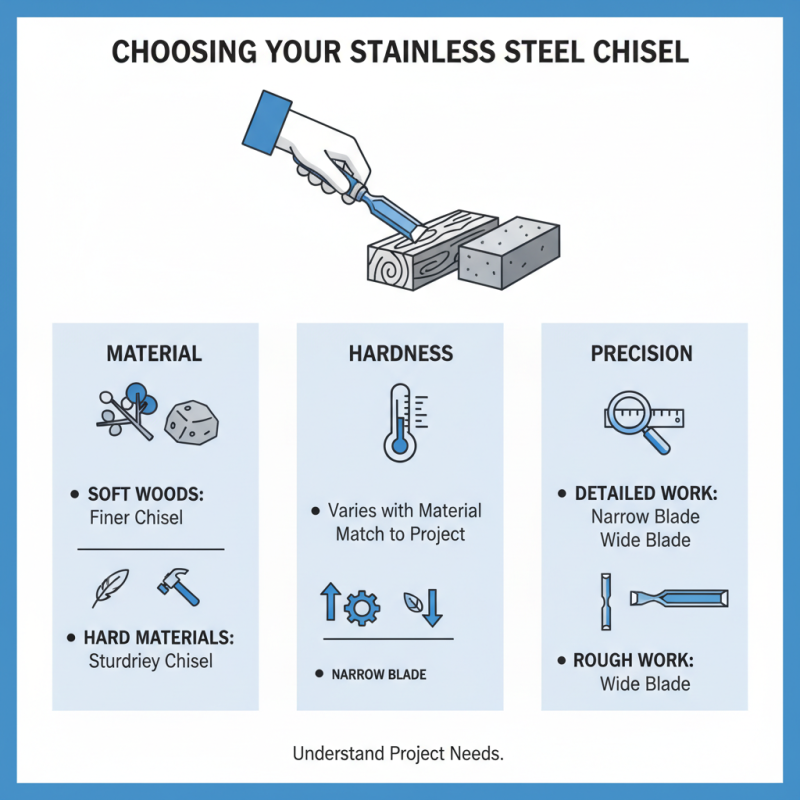
Choosing the right stainless steel chisel starts with understanding your project's needs. Consider the material you’ll be working with. Different materials may require varying chisel hardness. For softer woods, a finer chisel may be beneficial. Conversely, harder materials need a sturdier option. Your project’s precision requirements also matter. A detailed task may require a narrow blade for delicate work.
Think about the tool's size. A larger chisel can give you power, while a smaller one allows for finer detail. If your project involves tight spaces, a compact chisel will serve you better. Don’t overlook the handle comfort. An uncomfortable grip can lead to fatigue. You may rush and make mistakes. It’s wise to test different handles if possible.
Budget plays a role too. Sometimes, lower-cost options seem appealing. However, quality is often more important for durability. Evaluate how frequently you'll use the chisel. If it’s a one-time project, a less expensive choice might suffice. In contrast, regular use warrants investing in a better chisel. Reflect on these factors to make a sound choice that aligns with your project's demands.
Key Features to Consider When Selecting a Stainless Steel Chisel
When choosing a stainless steel chisel for your project, consider key features that can impact your work. The blade material is crucial. High-quality stainless steel resists rust and stays sharp longer. Look for a chisel with a blade thickness that suits the material you'll be working with. A thicker blade provides strength, while a thinner one allows for finer details.
Tip: Always check the handle design. A comfortable grip can make a significant difference in your control. Wooden handles are traditional, but rubberized ones can offer better grip under various conditions. Balance matters too. A well-balanced chisel reduces fatigue during prolonged use.
Pay attention to the chisel's cutting edge. Some have beveled edges for better precision. Others provide a flat edge suitable for chiseling larger surfaces. Reflect on how the chisel feels in your hand. If it doesn’t feel right, it may not be the tool for you, regardless of its features. Taking the time to assess these details can enhance your craft significantly.
Stainless Steel Chisel Performance Comparison
Comparing Quality and Price: Finding the Best Value for Your Needs
Choosing the right stainless steel chisel can significantly impact your project. When comparing quality and price, it's essential to understand what you need. In general, higher-quality chisels last longer, but they may cost more. Conversely, cheaper options might not withstand tough tasks.
Tip: Look for chisels with a comfortable handle. A good grip enhances control and reduces fatigue. Even a high-quality chisel can be uncomfortable to use if it doesn’t fit your hand well. Make sure to test it out.
Pay attention to the blade design. Some chisels have different bevel angles, affecting their performance. A wide chisel may be great for removing material quickly, while a narrow one allows for precision work. Finding the balance between these characteristics is vital.
Tip: Consider your project requirements. Sometimes, spending a little more is worth the investment. If you frequently use chisels, opt for durability. However, if you only need one for a rare task, a less expensive option may suffice. Reflect on your needs before making a decision.