

Request a Quote
certificate
Leave Your Message

What Is the Best Diamond Hole Saw for 2026?

Choosing the best Diamond Hole Saw for 2026 is not about picking the most expensive kit. It is about matching the bit to the material, hole size, drill, and amount of work. A small opening for a shower fitting puts different demands on a saw than repeated cuts through thick porcelain. The wrong match can mean a wandering start, chipped glaze, or a hot bit that stops cutting well. Small details matter.

This guide uses Morgan Hale as a composite diamond-tool specialist, not a real, independently verified source. His original, illustrative advice is: “Let the material set the pace; steady pressure and cooling beat forcing the cut.” Treat that as a practical reminder, not a sourced quotation. For your own project, check the manufacturer’s instructions for the saw, drill speed, and cooling method. Then compare grit and bond, cutting depth, arbor compatibility, and the maker’s stated materials. Those details are more useful than a bold “pro-grade” label. A water-fed setup can help manage heat on suitable jobs, while dry-cutting designs call for their own instructions. Don’t assume one bit handles every surface. It may not.

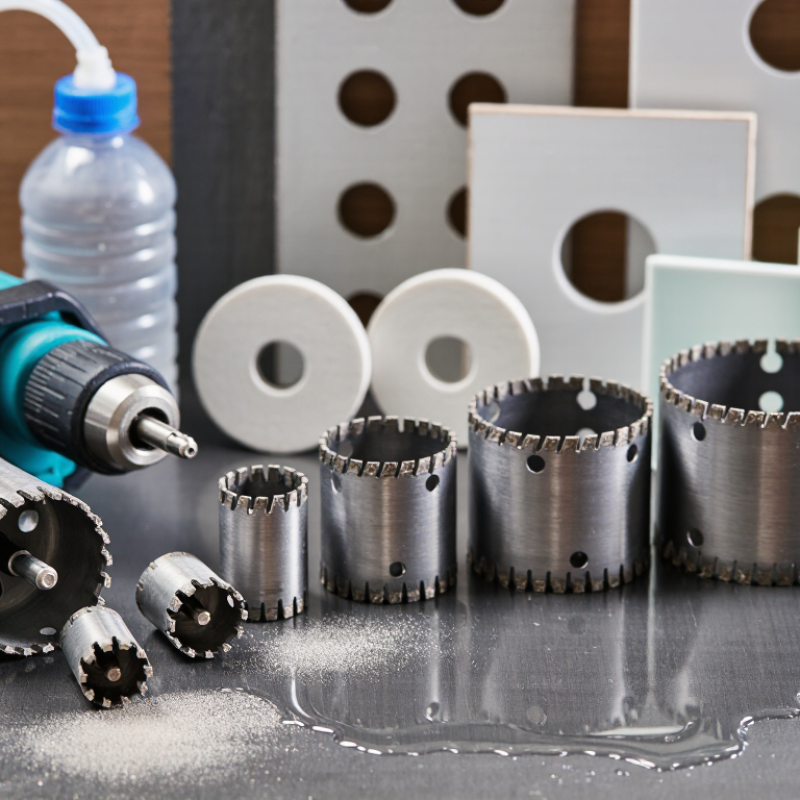
The sections ahead explain how to weigh cutting speed against control, service life, and value. We’ll also look at common sizes and features that matter in real use. A scratched tile or dusty workbench is a useful reminder: even a strong tool cannot fix a poor setup. No single Diamond Hole Saw is best for every buyer. The best choice is the one that fits your material, equipment, and working conditions—and leaves room for careful technique.
What Is the Best Diamond Hole Saw for 2026?

What a Diamond Hole Saw Is and How It Works

A diamond hole saw cuts hard materials by grinding, not by using sharp teeth. Its rim carries tiny diamond particles bonded to a metal segment. As the drill turns, these particles abrade a circular path through tile, glass, stone, or masonry. The tool’s hollow center leaves a round plug, while the open core helps remove dust and slurry. Slow, steady pressure matters. Pushing too hard can overheat the rim, crack brittle tile, or make the cut wander.

Diamond grit gradually wears as it works, exposing fresh cutting points beneath the surface. Most hole saws need water to cool the rim and carry away abrasive debris; check the tool’s instructions before using water with any drill. For a clean start on smooth tile, hold the saw at a slight angle, make a shallow crescent, then bring it upright. It takes practice. Even careful cuts can chip.

Tips: Mark the center clearly and support the material from behind when possible. Use light pressure and keep the cutting area damp if the tool allows it. Pause if the rim feels hot or cutting slows. A little patience is usually better than forcing the saw.


Key Factors for Choosing a Diamond Hole Saw in 2026

What Is the Best Diamond Hole Saw for 2026?

Choosing well starts with the material, not the label. A hole saw suited to ceramic tile may not perform equally well in dense porcelain, glass, or stone. Check the tool’s stated compatibility, cutting diameter, and usable depth. A shallow cup can stall before it reaches a thick surface. For clean openings, the cutting rim should match the job, while the arbor must fit your drill securely. Small mismatches matter.

Cooling and speed also affect the cut. Some diamond hole saws are designed for dry use; others require water to limit heat and dust. Follow the manufacturer’s instructions for the specific tool and surface. Use steady pressure, and avoid forcing the rim when progress slows. Heat can wear the diamonds faster, while a wandering start may leave a chipped edge. This is easy to overlook. The “best” option is not always the fastest one; control can matter more.

Tips: Mark the center clearly, and use a guide or template if the bit tends to skate. Test on a spare tile when possible. Keep the workpiece supported, and inspect the cutting rim for wear before starting. I would still allow extra time for a first cut—the material can behave differently than expected.

Which Diamond Hole Saw Types Suit Different Materials?

Diamond hole saws suit different materials because their bond, rim design, and cooling needs vary. For porcelain tile, choose a fine-grit diamond rim designed for controlled, low-speed drilling; water cooling helps limit heat and chipping. Glass needs even gentler pressure and continuous cooling. A small crack can spread quickly. For natural stone, match the saw to the stone’s hardness and thickness rather than relying on the word “diamond” alone.

Concrete and masonry call for tougher segmented or core-style diamond saws, often used wet to control heat and dust. The USGS Mineral Commodity Summaries 2024 estimates U.S. construction sand and gravel production at about 960 million tons in 2023. That scale matters: aggregate in concrete can wear a cutting edge faster than plain mortar.

Check whether the bit is rated for reinforced concrete before drilling. A dry-use, vacuum-brazed saw can be practical for some stone and masonry jobs, but it is not automatically suitable for every tile. I still find this distinction easy to misjudge. Check the material, thickness, and cooling instructions, then test on an offcut when possible.

How to Compare Diamond Hole Saws for 2026

Choosing the best diamond hole saw for 2026 starts with the material, not the label. A bit suited to hard porcelain may cut slowly in soft ceramic. Check the maker’s stated materials, cutting depth, and diameter. Then match the shank to your drill and confirm its speed range. Small details matter.

Compare the rim and cooling method. Continuous rims can help reduce chipping on finished tile, while segmented designs may clear debris more readily. Wet cutting helps manage heat and dust, but it is not a substitute for proper controls. OSHA’s respirable crystalline silica standard sets an eight-hour exposure limit of 50 micrograms per cubic meter. NIOSH’s publication on occupational silica exposure also explains why dust control matters. Follow tool instructions and site safety requirements.

Test the choice against the actual job. A 35-millimeter opening through glazed tile differs from drilling a deep hole in dense stone. Look for clear guidance on water feed, compatible materials, and expected cutting depth—not just a high speed claim. Compare replacement availability and published performance conditions, too. Ratings can be useful, but they rarely describe your exact tile, pressure, or cooling setup. That’s the imperfect part. Check before buying.

How to Use and Maintain a Diamond Hole Saw Safely

A diamond hole saw is only as safe as its setup. Clamp the tile, stone, or concrete securely; mark the center; and check that the saw, arbor, and drill are undamaged. Wear eye protection, hearing protection, and a suitable respirator when dust may be produced. Keep loose clothing and hair clear. Small details matter.

Use steady, light pressure and keep the saw aligned. For materials that require water cooling, use a saw and drill rated for wet operation, and keep electrical connections protected from water with appropriate ground-fault protection. Never force a dull or overheated cutter. Concrete drilling can release respirable crystalline silica. OSHA’s construction silica standard sets an eight-hour permissible exposure limit of 50 micrograms per cubic meter and an action level of 25 micrograms. These are workplace exposure benchmarks, not a reason to ignore dust controls. Wet methods or suitable dust extraction can reduce airborne dust.

Let the cutter cool before handling it. Remove slurry and debris, then dry the saw to limit corrosion. Check diamond segments for uneven wear, cracks, or missing pieces before the next cut. Replace damaged parts. I still find it tempting to push harder when progress slows; that usually adds heat, not speed. Pause, inspect the cut, and let the diamonds work.

What Is the Best Diamond Hole Saw for 2026? — How to Use and Maintain a Diamond Hole Saw Safely

Material or task Suitable diamond hole saw Recommended cutting approach Key safety and selection points Care after use
Porcelain tile Diamond-grit hole saw rated for porcelain and the required hole diameter Use a drill without hammer action. Start at a slight angle or use a guide, then bring the tool upright. Apply light, steady pressure and use water if the bit is designed for wet cutting. Check the bit’s stated speed limit and the drill’s compatibility. Secure the tile and wear eye protection. Do not force the bit; excess pressure can overheat it or damage the tile. Rinse away slurry, clear debris from the cutting edge, and dry the bit before storage.
Ceramic wall tile Diamond-grit hole saw intended for ceramic tile Keep the workpiece supported. Begin slowly to establish the cut, then maintain a controlled, even feed. Follow the bit’s wet- or dry-cutting instructions. Use a suitable guide to reduce wandering. Avoid hammer mode and sudden side loading, especially as the bit breaks through. Clean the rim and inspect for uneven wear, cracks, or a damaged shank.
Natural stone, such as granite or marble Diamond core-style hole saw specified for the particular stone and cutting method Use steady, light pressure and adequate cooling where required. For wet cutting, manage water and slurry so they cannot reach non-waterproof electrical equipment. Stone types vary in hardness and structure; confirm the bit is suitable for the material. Support the stone and control dust or slurry. Flush out stone residue and allow the bit to dry fully to help prevent corrosion of non-diamond components.
Glass Fine-grit diamond glass hole saw specifically intended for glass Use low, controlled pressure and the cooling method specified for the bit. Support the glass evenly and stop before breakthrough if needed to finish from the opposite side. Do not drill tempered glass; it can shatter. Wear eye protection and gloves, and follow the glass and tool manufacturers’ instructions. Rinse off glass particles carefully and check the cutting edge for damage before reuse.
Masonry or concrete Diamond core bit rated for the specific material and for wet or dry operation Use only with a compatible drill or core-drilling machine. Follow the bit’s operating instructions and use the required dust extraction or water supply. Check for hidden wiring, plumbing, and reinforcement before drilling. Do not use hammer action unless the bit and tool are expressly designed for it. Wear appropriate respiratory and eye protection. Remove dust or slurry, inspect the segment or rim, and store the bit clean and dry.
Choosing a general-purpose option Select by material, hole diameter, wet/dry rating, shank type, and tool compatibility—not by a universal “best” label Match the bit’s specified maximum speed to the tool setting. Start with light pressure and let the diamond abrasive do the cutting. There is no single diamond hole saw that is best for every material. Use the product instructions as the authority for speed, cooling, and compatible tools. Store the bit dry, protect the cutting edge, and replace it if the body, shank, or cutting rim is cracked or otherwise damaged.

Safe-use reminder: Clamp or otherwise secure the workpiece, keep hands clear of the cutting path, and disconnect the tool before changing or cleaning the bit. Never exceed the bit’s rated speed, and never use water with electrical equipment that is not designed for wet operation.