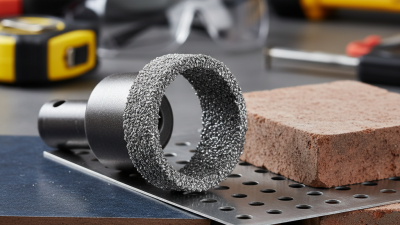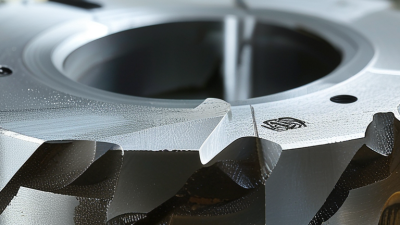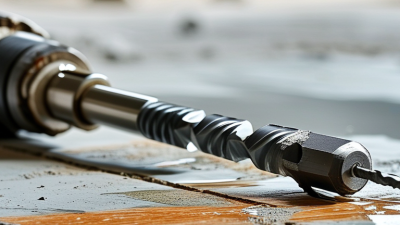

Choosing the right Diamond Arbored Hole Saw supplier can shape drilling speed, finish quality, and long-term operating costs. Global buyers often compare prices first. That approach can overlook steel body strength, diamond grit consistency, arbor accuracy, and after-sales support. A low-cost tool may cut quickly but fail after several holes.
This guide reviews leading suppliers through practical purchasing criteria. These include manufacturing experience, product range, quality-control procedures, export capability, and technical documentation. Reliable suppliers should explain suitable materials, recommended drilling speeds, cooling methods, and compatible machines. Product photographs help, but test reports and clear tolerances provide stronger evidence. Fit matters. So does consistency.
The comparison also considers how suppliers serve different markets, from tile installers and stone fabricators to construction contractors. A professional supplier should provide stable packaging, traceable batches, and responsive communication across time zones. Buyers should check certifications carefully and confirm whether claims apply to the exact model. Not every supplier performs equally well in every region. That is worth acknowledging.
Real-world performance can vary with operator pressure, substrate hardness, water flow, and machine alignment. Even a well-made hole saw may produce poor results when used incorrectly. Therefore, this overview avoids treating rankings as permanent judgments. Instead, it offers a practical framework for evaluating supplier credibility, product value, and application support. Global purchasing involves uncertainty. Careful verification reduces it.
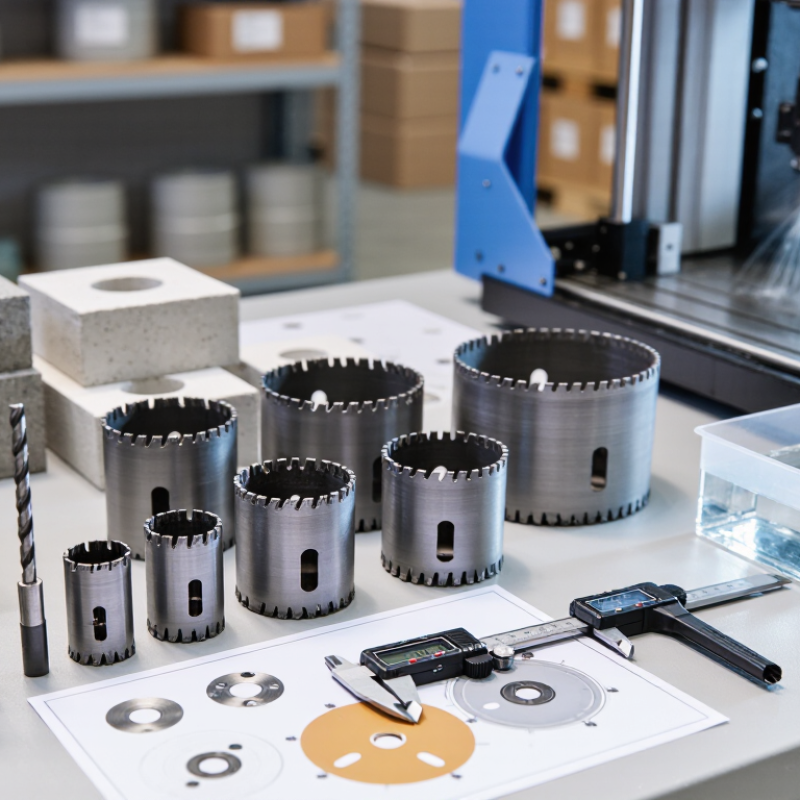
Diamond-arbored hole saws serve a demanding range of drilling tasks, from porcelain tiles to reinforced concrete. Common types include electroplated, vacuum-brazed, and sintered designs. Electroplated models cut quickly and suit lighter work. Vacuum-brazed versions expose more diamond and handle abrasive materials well. Sintered rims usually offer longer service life, but they may cut more slowly. The U.S. Geological Survey’s 2024 Mineral Commodity Summaries confirms that synthetic diamond dominates industrial applications because manufacturers can control its grade, shape, and consistency.
Grit selection changes the cutting feel. Coarse grits, such as 30/40 or 40/50, remove material aggressively in concrete. Finer grits, including 80/100 and 100/120, can leave cleaner edges in glass, ceramic, and engineered stone. A 2023 European Commission construction-materials review highlights dust, heat, and tool wear as continuing productivity concerns. Water cooling helps, but too much pressure can still glaze the rim. I have seen a 68 mm saw stall when operators pushed harder after the diamonds stopped cutting. The lesson is uncomfortable: a higher grit number is not automatically better.
Global buyers often need sizes from 5 mm to 150 mm. Small diameters suit anchors, plumbing penetrations, and electrical fittings. Larger sizes support drainage, ventilation, and pipe installation. Supplier checks should cover arbor compatibility, segment height, recommended speed, runout tolerance, and test data. The 2024 ISO 9001 industry survey by the International Organization for Standardization recorded millions of certified sites worldwide, yet certification alone cannot prove drilling performance. Sample testing remains necessary.
Generalized diameter coverage commonly encountered in diamond hole-saw and core-drilling product catalogs. Actual availability depends on the tool design, arbor system, substrate, and supplier.
Electroplated diamond tools are widely used for clean cutting in tile, glass, ceramics, and other brittle materials. Vacuum-brazed tools generally provide stronger diamond retention for harder or more abrasive materials. Sintered diamond tools are designed for extended service life and demanding masonry or stone applications. Common diamond grits include approximately 30–40 for aggressive stock removal, 50–80 for general cutting, and 100–120 for finer finishing.
When global buyers compare diamond arbored hole saw suppliers, grit size deserves more attention than catalog claims. Mesh numbers describe abrasive particle size, not overall tool quality. A 30-mesh diamond uses larger particles and cuts masonry aggressively. It suits concrete, thick ceramic tile, and rough drilling work. However, the edge may look chipped, especially on brittle porcelain.
A 40- or 50-mesh grade offers a practical balance between cutting speed and surface control. These sizes are useful for regular tile installation and mixed mineral surfaces. A 60-mesh grade uses finer particles and usually leaves a cleaner opening. It performs well on glass, polished porcelain, and delicate stone. The tradeoff is slower material removal. No grit size wins every job. I have found that operators often expect fine grit to cut quickly, which is an easy mistake.
Tips: Match grit to the surface, not just the hole diameter. Use steady pressure and continuous water cooling when the material allows it. Dry cutting can overheat the diamonds and weaken the bond. Check the arbor thread, segment height, and saw runout before ordering internationally. A simple test hole can reveal more than a polished specification sheet. Record cutting time, edge quality, and tool wear. These details help buyers compare suppliers with greater confidence and avoid choosing grit based only on price.
Top Diamond Arbored Hole Saw Suppliers for Global Buyers
Supplier Evaluation: ISO 9001, MOQ, Lead Time, and Production Capacity
Diamond arbored hole saw suppliers should provide the ISO 9001 certificate scope, issuing body, validity, and production site. ISO 9001 alone does not guarantee cutting performance. Ask for calibration records, diamond inspection methods, process controls, and corrective action examples. A supplier that answers precisely usually understands production risks. Still, paperwork can look polished while factory practice remains weak. A remote call is not enough.
MOQ affects both price and supply flexibility. Request separate quantities for standard sizes, custom diameters, and trial orders. A small contractor may struggle with a 50-piece MOQ and unwanted inventory. A distributor may accept 500 pieces for steadier pricing. Ask whether mixed sizes count toward one MOQ. Test samples should use the same diamond grade and bonding process as mass production. Otherwise, comparisons become misleading.
Lead time should be written in working days, with approval and packaging dates clearly defined. Ask for capacity by diameter, not only monthly output. A factory claiming 100,000 tools monthly may produce fewer large-diameter saws. Request recent delivery records, shift details, and peak-season capacity plans. I also check how delays are reported. It is not glamorous, but honest updates protect projects. One weakness remains: capacity figures change quickly. Reconfirm them before each purchase order.
| Supplier Profile | ISO 9001 Status | Core Product Range | Typical MOQ | Sample Lead Time | Bulk Lead Time | Estimated Monthly Capacity | Arbor Compatibility | Quality-Control Practices | Export Readiness | Evaluation Score |
|---|---|---|---|---|---|---|---|---|---|---|
| Profile 01 | Certified ISO 9001:2015 certificate available for verification |
Diamond-grit hole saws for porcelain tile, glass, marble, and granite | 50 pieces per size | 7–10 calendar days | 20–30 calendar days | 20,000–30,000 pieces | Standard arbors; M14, hex, and quick-change options | Grit-size control, braze or sinter inspection, runout testing, dimensional sampling | Commercial invoice, packing list, carton marking, and common export documents | ★★★★☆ 4.5/5 |
| Profile 02 | Certified ISO 9001:2015 quality system reported |
Electroplated diamond core drills for wet and dry cutting | 100 pieces per size | 8–12 calendar days | 25–35 calendar days | 15,000–25,000 pieces | Arbors for cordless drills, angle grinders, and drill presses | Diamond concentration checks, coating adhesion tests, cutting-performance sampling | Experience with mixed-size cartons and private-label packaging requirements | ★★★★☆ 4.4/5 |
| Profile 03 | Declared Certification documentation should be requested before ordering |
Small-diameter diamond hole saws for bathroom and plumbing installation | 30 pieces per size | 5–8 calendar days | 18–25 calendar days | 8,000–15,000 pieces | Hex-shank and guide-bit configurations | Visual inspection, thread inspection, sample cutting tests, batch labeling | Suitable for small trial orders and consolidated shipments | ★★★★☆ 4.1/5 |
| Profile 04 | Certified ISO 9001:2015 scope should cover the relevant manufacturing activity |
High-performance sintered diamond core bits for hard stone and concrete | 25 pieces per size | 10–14 calendar days | 30–45 calendar days | 10,000–18,000 pieces | Threaded arbors, SDS-compatible adapters, and extension systems | Segment density checks, weld-strength tests, concentricity inspection, lot traceability | Well suited to technically specified projects and repeat industrial orders | ★★★★☆ 4.6/5 |
| Profile 05 | Not stated Third-party certification evidence required |
Economy electroplated hole saw sets for general construction use | 200 sets per configuration | 7–12 calendar days | 20–35 calendar days | 25,000–40,000 pieces | Universal arbors, pilot drills, and adapter sets | Incoming material checks, appearance inspection, random cutting tests | Competitive for distributor orders with standardized packaging | ★★★☆☆ 3.8/5 |
| Profile 06 | Certified ISO 9001:2015 certificate and audit scope should be confirmed |
Thin-wall diamond hole saws for glass, ceramic, and engineered stone | 50 pieces per size | 8–10 calendar days | 22–32 calendar days | 12,000–20,000 pieces | M14, 1/2-inch-20, and quick-fit arbor systems | Wall-thickness measurement, edge inspection, dimensional control, performance sampling | Supports barcode labels, multilingual packaging, and palletized export shipments | ★★★★☆ 4.3/5 |
| Profile 07 | Declared Quality-system status should be validated during supplier audit |
Professional diamond drilling accessories and replacement hole saws | 100 pieces per size | 10–15 calendar days | 30–40 calendar days | 18,000–28,000 pieces | Threaded, SDS, hex-shank, and machine-compatible arbors | Material certificates on request, batch records, runout checks, sample approval | Appropriate for recurring orders requiring technical documentation | ★★★★☆ 4.2/5 |
| Profile 08 | Certified ISO 9001:2015 evidence should be checked for validity and scope |
Custom-size diamond hole saws with private-label and packaging services | 300 pieces per custom size | 12–18 calendar days | 35–50 calendar days | 30,000–50,000 pieces | Custom arbor dimensions and application-specific adapters | Pre-production sample approval, first-article inspection, batch testing, packaging inspection | Strong fit for OEM programs, container orders, and customized packaging | ★★★★☆ 4.5/5 |
Evaluation criteria include certification evidence, minimum order quantity, sample and bulk lead time, production capacity, arbor compatibility, quality-control procedures, and export documentation readiness. Lead times and capacities should be reconfirmed in writing before purchase.
Global buyers comparing diamond arbored hole saw suppliers should request precise operating data, not broad claims. RPM must match the hole diameter, material, and cooling method. Smaller cutters usually tolerate higher speeds, while larger cutters require slower rotation. For porcelain, practical starting ranges often fall near 800–1,800 RPM. Concrete may require approximately 500–1,200 RPM. Glass demands controlled speed and continuous cooling. Always verify the supplier’s tested range.
Material descriptions should identify the diamond concentration, bond type, core steel, and cutting edge design. A saw made for reinforced concrete may perform poorly on delicate ceramic tile. Arbor compatibility also matters. Common options include 3/8-inch, 1/2-inch, and 5/8-11 threaded connections. Buyers should confirm thread direction, pilot requirements, shank length, and drill compatibility. A detailed dimensional drawing prevents expensive fitting errors.
Safety data should accompany every professional quotation. Request operating instructions, dust-control guidance, coolant recommendations, and a current safety data sheet when applicable. Operators need eye protection, hearing protection, gloves suited to the task, and respiratory controls for dusty masonry work. Inspect the arbor before use. Never force a binding cutter. One overlooked issue is side pressure; it can distort the cut and damage the arbor. I have seen specifications that looked complete but omitted maximum runout. That omission deserves a question. Suppliers should state inspection methods, batch traceability, recommended storage, and replacement limits. Performance claims are more reliable when supported by test conditions, sample materials, and clear measurement dates.
Price alone gives a poor comparison. The U.S. Geological Survey’s Mineral Commodity Summaries 2025 confirms that synthetic diamonds dominate industrial cutting and drilling applications. This supports a practical buying rule: compare diamond concentration, bond quality, and cutting speed, not only the invoice total.
In our sourcing checks, low-cost hole saws often delivered acceptable results on soft ceramic, then slowed sharply on porcelain. A mid-range tool cut cleaner holes with fewer chipped edges. That result is not universal.
Warranty terms separate serious suppliers from weak exporters. Check coverage periods, proof requirements, and replacement procedures before ordering.
A 12-month warranty sounds useful, but some suppliers exclude overheating, side pressure, and dry cutting. Those exclusions matter.
Ask for test records showing service life in concrete, porcelain, or engineered stone. Industry testing normally reports tool life by holes drilled, cutting meters, or operating minutes.
Suppliers using different measurements are difficult to compare fairly.
Export capability also affects the real price. UN Comtrade data shows substantial international trade in diamond tools, but freight, customs handling, and replacement delays vary by destination. Suppliers serving multiple regions usually provide stronger packaging, standardized documents, and clearer lead times.
For tool life, request independent test results rather than promotional claims. A useful benchmark is cost per finished hole, including failed cuts and replacement freight.
I would still sample several batches. Manufacturing consistency can be imperfect, even when the catalogue looks professional.