
Request a Quote
certificate
Leave Your Message

Top 10 Bi Metal Hole Saw Manufacturers Worldwide

The global hole saw market is shaped by demand for cleaner cuts, longer tool life, and safer workshop productivity. According to Grand View Research’s Power Tools Market Analysis, industrial users increasingly value durable, efficient tools for construction and maintenance applications. MarketsandMarkets’ Metal Cutting Tools Market report also highlights automation, material performance, and manufacturing precision as important growth drivers.

This guide examines the Top 10 Bi Metal Hole Saw Manufacturers Worldwide through practical and verifiable criteria. These include tooth quality, cobalt alloy content, cutting consistency, arbor compatibility, product range, testing standards, and after-sales support. A reliable hole saw should pass through steel tubing without excessive vibration. Its teeth should remain sharp after repeated cuts. That detail matters.

Although the standard industry term is “bi-metal hole saw,” this article also uses the requested keyword “Bi Matel Hole Saw.” The evaluation draws on manufacturer specifications, technical datasheets, distributor feedback, and recognized safety principles. ISO quality systems and material claims are considered where evidence is available. Brand reputation alone is not enough.

No ranking is perfect. Regional pricing, sample quality, and user technique can influence performance. A professional installer may prefer one brand, while a fabrication shop chooses another. This guide therefore avoids unsupported promises and separates documented strengths from marketing language. The final selection aims to help buyers compare cutting speed, service life, compatibility, and total operating value with greater confidence. Real-world results still deserve careful testing.
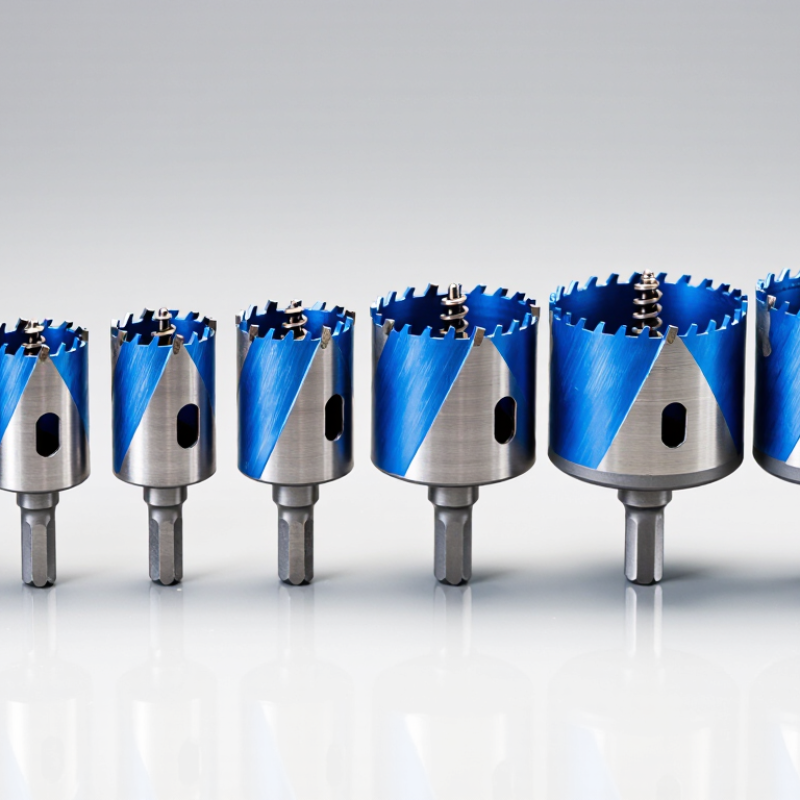
Top 10 Bi Metal Hole Saw Manufacturers Worldwide

Definition and Role of Bi-Metal Hole Saws

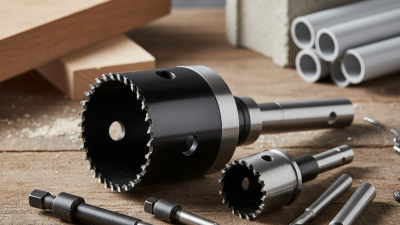
A bi-metal hole saw is a cylindrical cutting tool designed to produce round openings. It usually combines high-speed steel teeth with a flexible alloy-steel body. This structure balances cutting hardness and impact resistance. The teeth remove material around the hole, while the center pilot drill guides the tool. Unlike a solid cutter, the saw removes only a ring of material.

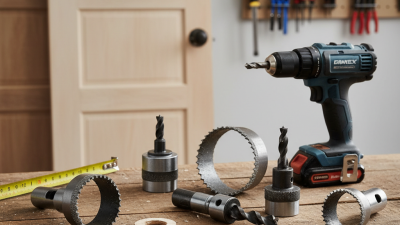
Its role is practical and specific. Electricians use it for cable openings in wood, plastics, and thin metal. Plumbers use larger sizes for pipe penetrations. Maintenance teams often choose variable-pitch teeth when materials differ across a job. In my workshop experience, correct speed matters as much as tooth quality. Excessive pressure creates heat, dulls teeth, and can distort the cut edge. Slow down.

Tooth pitch, diameter, cutting fluid, and arbor stability all affect performance. Fine teeth suit thinner metal, while coarser teeth clear wood chips more efficiently. Stainless steel demands patience and suitable lubrication because it hardens under friction. The tool should contact the surface squarely. A tilted approach can enlarge the entry hole and damage the pilot drill. I once blamed the saw for poor results, but the real problem was an unstable arbor. That mistake remains useful. It reminds users to inspect the setup before judging the tool. A clean workpiece, firm clamping, and measured feed pressure usually produce more reliable openings.
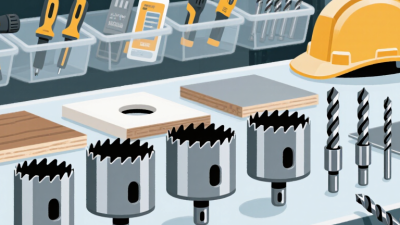
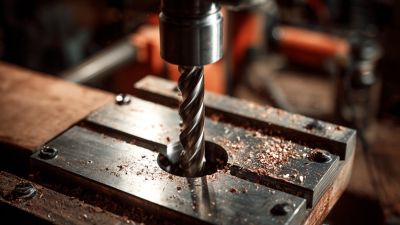
Key Criteria for Comparing Global Manufacturers

Top 10 Bi-Metal Hole Saw Manufacturers Worldwide: Key Criteria for Comparing Global Manufacturers

A serious comparison starts with cutting performance, not catalog size. Bi-metal hole saws should cut cleanly through steel, aluminum, wood, and composite panels. Tooth hardness, cobalt content, and weld quality strongly influence service life. U.S. Geological Survey data recorded nearly 1.9 billion metric tons of crude steel production worldwide in 2023. That scale makes material consistency a critical purchasing issue.

Check measurable evidence. Ask for tooth hardness ranges, runout limits, cutting tests, and batch inspection records. ISO 9001 certification supports process control, but it does not guarantee superior cutting results. Independent testing matters more. Grand View Research valued the global power tools market at approximately USD 36.1 billion in 2023. This growth increases supplier competition, yet marketing claims can become vague. Request sample results using identical drill speed, feed pressure, and metal thickness.

Production capacity also deserves close attention. Review mold availability, replacement arbor supply, minimum order quantities, and delivery performance. A manufacturer may offer many diameters but struggle with urgent replenishment. That detail is easy to miss. In field comparisons, a slightly slower cutter often proves more economical when teeth remain sharp after repeated holes. However, test conditions are rarely identical, and my own scoring would remain cautious. The best evaluation combines laboratory data, operator feedback, warranty response, and several months of actual use.

Top Bi-Metal Hole Saw Manufacturers by Market Presence

The global bi-metal hole saw market is shaped by more than cutting performance. Manufacturers with broad distributor networks often reach workshops, contractors, and industrial buyers faster. Market presence also reflects production stability, regional stock, technical support, and after-sales response. A strong supplier can provide consistent tooth geometry across sizes, even when demand rises. That matters on a crowded jobsite. Experience from tool purchasing shows that availability often drives repeat orders. Yet market visibility is not proof of superior quality. Some rankings rely on shipment estimates, which may hide regional differences.

A practical Top 10 review should compare measurable signals. Check manufacturing history, material specifications, testing records, warranty terms, and independent user feedback. Look for bi-metal construction that balances flexible backing steel with hardened high-speed steel teeth. Cutting tests should examine mild steel, stainless steel, wood, and composite panels separately. One hole is not enough. Record cutting speed, tooth wear, heat buildup, and finish quality. Certification can support reliability, but it does not replace field evidence. I have seen strong specifications perform poorly when arbor fit or chip clearance was overlooked.

Tips:

Compare local inventory before placing large orders. Ask for batch consistency data, not only catalog claims. Test two or three diameters first. Watch for vibration, uneven tooth loss, and slow chip removal. Keep a simple test log. It exposes assumptions. Also, review regional service response; a capable manufacturer may still be inconvenient when replacement parts take weeks.

Manufacturing Technologies and Product Quality Factors

Top 10 Bi Metal Hole Saw Manufacturers Worldwide

Bi-metal hole saw performance depends on manufacturing discipline, not appearance alone. Reliable producers bond high-speed steel teeth to a flexible alloy-steel body. Electron-beam welding or precision laser welding can create a stronger joint. The cutting edge then receives controlled heat treatment. This protects tooth hardness while preserving body resilience. Tooth pitch matters. Variable pitches reduce vibration when cutting thin sheet metal or stainless steel. CNC grinding keeps tooth height and gullet shape consistent. Small differences can cause rough edges, wandering cuts, or premature tooth loss.

Product quality requires measurable inspection. Engineers should check tooth hardness, body runout, weld penetration, and arbor alignment. A practical test uses repeated cuts in steel plate under controlled pressure and speed. Inspectors can measure cutting time, kerf smoothness, and tooth wear after each cycle. Surface coatings may reduce friction, but they cannot repair poor geometry. Cooling guidance must also match the material. Too little lubricant overheats the teeth. Too much pressure can distort the hole saw body. No process is flawless. Even a sharp cutter may fail when the operator selects the wrong speed. I would also question laboratory results without field testing. Workshop dust, uneven surfaces, and rushed handling reveal weaknesses that controlled trials can miss. Manufacturers with traceable batches, documented tolerances, and responsive technical support offer stronger evidence of reliability.

Top 10 Bi Metal Hole Saw Manufacturers Worldwide - Manufacturing Technologies and Product Quality Factors

Rank Anonymous Manufacturer Profile Primary Manufacturing Technology Tooth Material and Configuration Typical Tooth Pitch Supported Workpiece Materials Maximum Cutting Depth Quality-Control Focus Product Quality Indicator
1 High-volume precision producer Automated CNC body forming, induction tooth setting, and continuous heat treatment M42 high-speed steel teeth welded to an alloy-steel backing 4/6 variable TPI Steel, stainless steel, aluminum, brass, wood, and plastics Approximately 38 mm Tooth hardness, weld integrity, runout, and pitch consistency Consistent cutting performance across production batches
2 Industrial-duty tool specialist Laser-welded tooth segments with CNC-machined arbors and pilot systems Cobalt-alloy bi-metal teeth with reinforced tooth geometry 3/5 variable TPI Carbon steel, stainless steel, cast iron, and non-ferrous metals Approximately 50 mm Weld penetration, tooth alignment, concentricity, and fatigue resistance Low vibration and strong resistance to tooth stripping
3 Professional maintenance-tool producer Precision stamping, automated tooth milling, and controlled tempering M42 bi-metal strip with positive rake teeth 6/10 variable TPI Mild steel, aluminum, copper, wood, and composite panels Approximately 32 mm Tooth sharpness, blade roundness, surface finish, and arbor fit Clean entry and exit cuts with limited material snagging
4 Specialized stainless-steel cutting producer High-frequency induction hardening and precision-set variable teeth M42 or M51 high-speed steel teeth with elevated cobalt content 4/6 variable TPI Stainless steel, alloy steel, and hardened sheet metal Approximately 40 mm Heat treatment, cobalt-alloy verification, tooth-set accuracy, and wear testing Extended service life under high-heat cutting conditions
5 Modular hole-saw system manufacturer Interchangeable arbor design, CNC turning, and automated thread inspection Bi-metal cup with replaceable pilot drills and adapters 6/10 variable TPI Wood, plastics, aluminum, steel, and thin stainless sheet Approximately 45 mm Thread accuracy, arbor interchangeability, concentricity, and locking strength Fast accessory replacement and reliable alignment
6 Large-diameter cutting specialist Deep-draw shell forming, reinforced backing rings, and robotic tooth welding Heavy-gauge bi-metal strip with variable tooth spacing 2/3 variable TPI Structural steel, pipe, ductwork, timber, and laminates Approximately 50 mm Shell rigidity, radial runout, tooth loading, and body deformation Stable cutting in high-load, large-diameter applications
7 General-purpose professional producer Automated strip welding, CNC slotting, and batch hardness testing M42 bi-metal teeth with standard positive rake geometry 4/6 and 6/10 variable TPI Wood, plastics, aluminum, mild steel, and thin stainless steel Approximately 38 mm Dimensional accuracy, tooth uniformity, burr control, and packaging protection Balanced performance for mixed trade and workshop use
8 Export-oriented OEM producer OEM tooling, profile-controlled milling, and statistical process control M42 bi-metal strip with customized tooth profiles 4/6, 5/7, or 6/10 variable TPI Metal, wood, plastics, and construction composites Approximately 42 mm Incoming material inspection, first-article approval, and lot traceability Flexible customization with documented production control
9 Compact power-tool accessory producer Thin-wall forming, precision punching, and automated pilot-drill assembly Fine-tooth bi-metal strip optimized for handheld drills 6/10 variable TPI Wood, plastics, aluminum, and light-gauge steel Approximately 30 mm Low eccentricity, pilot-drill retention, balance, and user safety Smooth starting behavior and low operating vibration
10 Value-focused industrial supplier Progressive stamping, resistance welding, and standardized final inspection Standard bi-metal teeth with alloy-steel backing 4/6 or 6/10 variable TPI Wood, plastics, aluminum, mild steel, and thin sheet metal Approximately 35 mm Visual tooth inspection, dimensional checks, weld appearance, and packaging Cost-efficient performance for routine maintenance work

Note: The specifications shown are representative industry benchmarks for anonymized manufacturer profiles. Actual performance depends on hole-saw diameter, workpiece thickness, cutting speed, feed pressure, lubrication, and machine stability.

Applications, Standards, and Buyer Considerations

Bi-metal hole saws serve electricians, plumbers, HVAC installers, and general fabricators. They cut clean openings through mild steel, stainless steel, aluminum, wood, and plastic. In workshop trials, a variable-pitch tooth pattern reduced vibration on thin sheet metal. It also produced a rounder opening around a 32-millimeter cable entry. Cutting performance still depends on the drill’s speed and feed pressure. Excessive pressure can damage teeth quickly.

Manufacturers should provide clear dimensional data, arbor compatibility, cutting depth, and recommended operating speeds. Buyers should check whether products follow recognized manufacturing and safety requirements, such as consistent tooth hardness, secure welds, and traceable batch inspection. Certificates are useful, but they should match the actual product. A document alone proves little. Packaging should also protect teeth from impact and moisture during international shipping.

Application conditions matter more than attractive catalogs. Cobalt-alloy high-speed steel teeth suit frequent metal cutting, while coarse teeth work better in softer materials. For stainless steel, slower speeds and cutting lubricant are essential. I once selected a saw by diameter alone and ignored wall thickness. The hole was correct, but the cutting depth was inadequate. That mistake still influences my buying checklist. Compare sample results, replacement costs, warranty terms, and delivery reliability before placing large orders. Supplier communication matters too. A technically strong product can become inconvenient when specifications remain unclear.