Top 10 Woodworking Speed Hole Openers for Global Buyers
Choosing the right Woodworking Speed Hole Opener can make a rough drilling task cleaner and more predictable. For global buyers, the challenge is not simply finding the largest diameter or lowest price. Wood type, hole size, drill compatibility, and cutting depth all affect performance. A tool that works smoothly in soft pine may struggle in dense hardwood, especially when its teeth are dull or the drill lacks sufficient torque.
Small details matter. This guide compares ten options through practical features buyers can verify, including cutting range, shank design, material, and included accessories. It also considers how easily each opener fits common woodworking setups. Product descriptions do not always explain tooth geometry or real cutting limits clearly, so check the manufacturer’s specifications before ordering. When available, user feedback can help, but a review from one project is not a guarantee for another.
A good fit depends on the work at hand. Occasional drilling may call for a simple, affordable set, while repeated use can justify sturdier construction and replaceable cutters. Keep the workpiece secured, follow the tool maker’s speed guidance, and clear chips when needed. These steps sound basic. They still get missed. No ranking can account for every drill, timber, or workshop condition, and some comparisons remain imperfect when specifications differ. Use the list as a starting point, then match the opener to your actual materials, equipment, and expected workload.
Classify 10 Hole-Opener Types by Cutter Geometry and Diameter Range
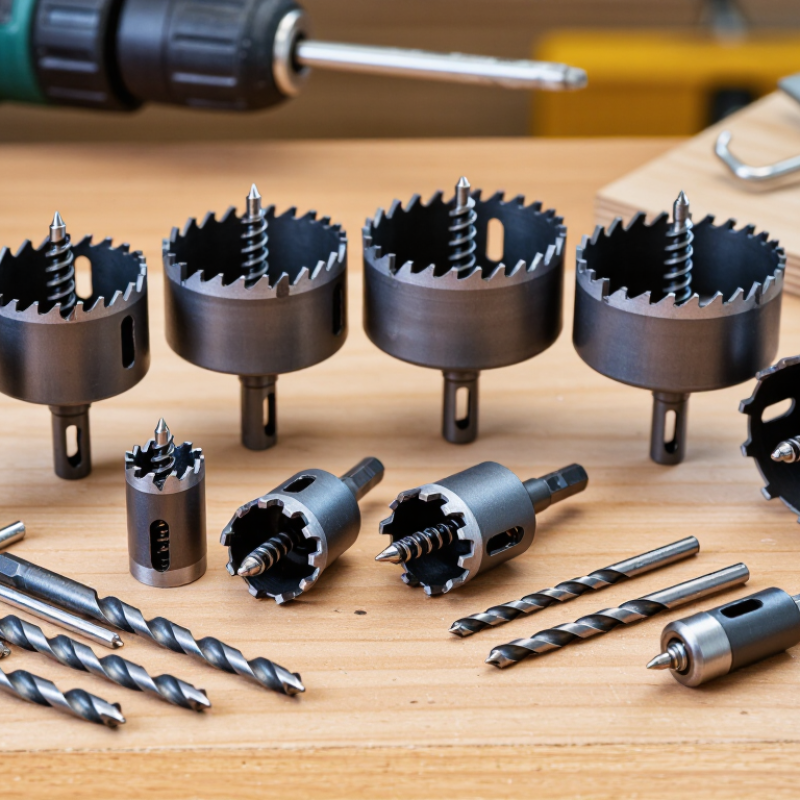
Wood hole openers differ by edge shape, chip clearance, and supported diameter. Typical buying ranges vary by maker, so confirm the product specification before ordering. A spade bit has a flat paddle and often covers 6–38 mm; an auger uses a screw tip and spiral flutes, commonly 6–32 mm. Self-feed bits use a lead screw and broad cutters, often 25–65 mm. Forstner bits leave flat-bottomed holes, typically 10–60 mm, while multi-spur bits use a rim-cutting edge, often 6–50 mm. A single-flute wood-boring bit is suited to controlled, smaller openings, generally around 6–25 mm.
For larger cuts, fine-tooth hole saws commonly span 14–210 mm; carbide-tooth versions, around 19–152 mm; and abrasive-grit saws, around 19–127 mm. Adjustable circle cutters use radial blades and may cover roughly 25–120 mm. These ranges are indicative, not universal. The Grand View Research Power Tools Market report estimated a USD 36.6 billion global market in 2023 and projected 5.2% annual growth through 2030. That broader market figure signals tool-sector scale, not hole-opener sales specifically.
Tips: Match geometry to the cut: use Forstner cutters for clean, flat seats and hole saws for larger through-holes. Check arbor compatibility and wood thickness. Fit matters. Test on scrap first; chip evacuation and wobble can still spoil a neat cut.
Compare Diameter, Cutting Depth, Shank Type, and Material Specs
Diameter sets hole size, but the workpiece sets the practical limit. A 25 mm opener suits cable passages; a 65 mm cutter may be better for larger fittings. Check cutting depth against board thickness, then allow room for chip removal. Deep cuts often need clearing midway. Fit matters.
Shank type determines compatibility and stability. Hex shanks generally resist slipping in suitable chucks, while round shanks fit many standard drills. Confirm the shank diameter, arbor arrangement, and whether a pilot bit is included. For handheld work, a secure chuck and controlled speed matter more than an impressive maximum diameter. Not always.
Material specs tell you what the teeth can tolerate. Carbon steel cutters are commonly suited to wood; bi-metal teeth may handle varied shop materials, but verify the stated use. For clean plywood edges, sharp teeth and a steady feed help reduce splintering. A product page may list diameter yet omit usable cutting depth. Ask for that measurement, plus replacement-pilot details, before comparing prices. Specs need context.
Top 10 Woodworking Speed Hole Openers for Global Buyers — Compare Diameter, Cutting Depth, Shank Type, and Material Specs
| No. |
Hole Saw Diameter |
Typical Cutting Depth |
Typical Arbor / Shank |
Representative Material Specs |
Suitable Woodworking Uses |
| 1 |
19 mm (3/4 in) |
38 mm (1-1/2 in) |
1/4 in hex arbor with pilot drill |
Carbon-steel cup; hardened cutting edge |
Small cable and hardware pass-through holes in softwood and sheet material |
| 2 |
25 mm (1 in) |
38 mm (1-1/2 in) |
1/4 in hex arbor with pilot drill |
Carbon-steel cup; hardened cutting edge |
Small plumbing, wiring, and cabinet-installation openings |
| 3 |
32 mm (1-1/4 in) |
38 mm (1-1/2 in) |
3/8 in hex arbor with pilot drill |
Carbon-steel cup; hardened cutting edge |
General-purpose holes in lumber, plywood, and other wood-based panels |
| 4 |
38 mm (1-1/2 in) |
38 mm (1-1/2 in) |
3/8 in hex arbor with pilot drill |
Carbon-steel cup; hardened cutting edge |
Medium-diameter openings for fittings and service access |
| 5 |
44 mm (1-3/4 in) |
38 mm (1-1/2 in) |
3/8 in hex arbor with pilot drill |
Carbon-steel cup; hardened cutting edge |
Joinery and installation holes in solid wood and panels |
| 6 |
51 mm (2 in) |
38 mm (1-1/2 in) |
3/8 in hex arbor with pilot drill |
Carbon-steel cup; hardened cutting edge |
Common-size openings for woodworking and cabinet work |
| 7 |
57 mm (2-1/4 in) |
38 mm (1-1/2 in) |
7/16 in hex arbor with pilot drill |
Carbon-steel cup; hardened cutting edge |
Larger access holes in timber and wood-based sheet goods |
| 8 |
64 mm (2-1/2 in) |
38 mm (1-1/2 in) |
7/16 in hex arbor with pilot drill |
Carbon-steel cup; hardened cutting edge |
Large openings for fittings, ducts, and workshop installations |
| 9 |
76 mm (3 in) |
38 mm (1-1/2 in) |
7/16 in hex arbor with pilot drill |
Carbon-steel cup; hardened cutting edge |
Wide access and installation holes in wood and panels |
| 10 |
89 mm (3-1/2 in) |
38 mm (1-1/2 in) |
7/16 in hex arbor with pilot drill |
Carbon-steel cup; hardened cutting edge |
Extra-large openings in timber, plywood, and other wood-based materials |
Specifications are representative of common hole-saw sizes and arbor arrangements; actual cutting depth, shank compatibility, and material construction vary by product and manufacturer. Confirm the arbor and workpiece thickness before use.
Match Spade, Auger, Forstner, and Hole-Saw Designs to Wood Types
A spade bit suits quick, rough holes in softwood, such as pine framing or cedar boards. Its broad cutting edges remove material fast, but the exit side can splinter. Clamp a scrap board underneath when a clean finish matters. In dense hardwood, ease the feed pressure; forcing the bit can leave burn marks.
For deeper holes, an auger’s screw tip helps pull it through timber, while its flutes carry chips out. It works well in thick beams, though knots can deflect the cut. Watch the grain. Forstner bits make flat-bottomed holes with crisp edges, useful for hinges and fittings in hardwood or plywood. They need steady control, and a handheld drill may wander on a large diameter. It can happen.
Hole saws are practical for wide openings in doors, panels, and softer boards. Choose tooth geometry and diameter for the wood, and clear packed dust before it heats the cut. Plywood’s layered veneers may chip at the surface, so a backing board and a light scoring pass help. No design is perfect for every species: resinous softwood can clog cutters, while hard, dry stock may demand slower progress and sharper edges. Test on an offcut. That small check often saves a visible mistake.
Calculate Spindle Speed: RPM = (SFM × 3.82) ÷ Bit Diameter (in)
For global buyers comparing woodworking speed hole openers, spindle speed is a practical starting point. Use RPM = (SFM × 3.82) ÷ bit diameter (in), with surface feet per minute (SFM) chosen for the wood and cutter. A 2-inch opener at 300 SFM works out to about 573 RPM. A larger cutter needs a slower spindle speed to keep its rim moving at a similar rate. Simple, but useful.
Wood is not uniform. Dense maple, soft pine, end grain, and plywood can respond differently, even with the same opener. Check the cutter maker’s guidance when available, then test on scrap from the actual workpiece. Watch for scorching, chatter, or a motor that strains; these are signs to pause and reassess. The formula cannot account for every setup, and that limitation matters.
Tips: Confirm the bit diameter in inches before calculating. Set the machine near the calculated RPM, clamp the stock, and feed steadily without forcing the cut. If the cut burns, lower the speed or clear chips more often. A quick test hole may feel like extra work, but skipping it can cost a finished panel.
Top 10 Woodworking Speed Hole Openers for Global Buyers
Estimated spindle speeds by hole-saw diameter, calculated using RPM = (SFM × 3.82) ÷ Bit Diameter (in). The estimates use a reference cutting speed of 300 SFM; actual speeds depend on the wood, cutter, and machine. Follow the cutter manufacturer’s guidance and adjust as needed.
Reference cutting speed: 300 SFM. Values are rounded to the nearest RPM.
Convert Global Sizing: 1 in = 25.4 mm; Check Shank and Safety Specs
When comparing woodworking speed hole openers across international listings, convert every measurement before ordering. One inch equals 25.4 mm, so a 1-inch cutter makes an opening about 25.4 mm wide. A listing rounded to 25 mm may describe a slightly different size. Small difference. Check the drawing, not just the product title, and allow for measurement tolerances in the finished hole.
The shank matters as much as the cutting diameter. Measure its diameter and length, then compare them with your drill’s chuck capacity and the available clearance. A cutter that fits the chuck may still be unsuitable for the drill’s power or operating speed. Check the maker’s stated speed range and maximum rating; do not assume that larger cutters can run at the same speed as smaller ones. Some listings omit details. Ask for a specification sheet when key figures are missing.
Before cutting, secure the workpiece with a clamp and keep hands clear of the cutter’s path. Wear eye protection, and use a drill suited to the tool’s shank and cutting load. Start steadily, clear chips when needed, and stop if the cutter binds or vibrates unusually. That pause can feel fussy, but it is better than forcing a poor cut. Afterward, check the hole with calipers if the fit is critical.