Top Carbide Grit Hole Saw Manufacturers for Global Buyers
Choosing reliable Carbide Grit Hole Saw manufacturers requires more than comparing prices or browsing attractive product photographs. Global buyers need evidence of cutting performance, production consistency, export experience, and responsive technical support. A professional supplier should explain grit size, backing material, brazing quality, arbor compatibility, and recommended cutting speeds. These details affect whether a hole saw cuts cleanly through tile, cement board, brick, or other abrasive materials.
Small details matter.
This guide introduces leading manufacturers serving international markets and examines the qualities that distinguish dependable partners. It considers factory capabilities, quality control procedures, product customization, packaging standards, and documentation for overseas shipments. Buyers should also review sample results, batch traceability, warranty terms, and communication during problem resolution. A manufacturer may offer impressive specifications, yet real performance can differ under jobsite conditions. That difference deserves attention.
No ranking is perfect.
Our evaluation approach combines practical purchasing experience with technical comparison. It recognizes that the best supplier for a construction distributor may not suit a specialized tool importer. Production scale, minimum order quantities, delivery schedules, and regional service can change the final decision. We also encourage buyers to question unclear claims and request measurable test data. This is not a flawless process, but careful verification reduces costly surprises. The following overview provides a clearer starting point for selecting Carbide Grit Hole Saw manufacturers with confidence, reliability, and long-term value.
Carbide Grit Hole Saws: Design, Grit Types, and Cutting Applications
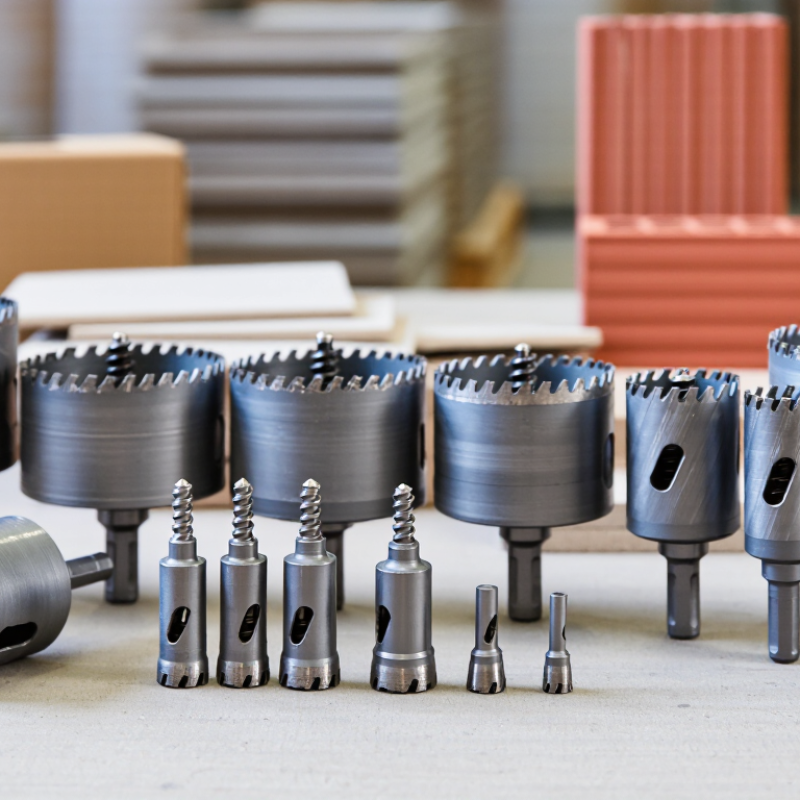
Carbide grit hole saws use a steel body coated with sharp carbide particles. Their design favors abrasion, not tooth-by-tooth cutting. This makes them useful on brick, cement board, fiberglass, ceramic tile, and abrasive composites. The USGS Mineral Commodity Summaries 2024 reported about 84,000 metric tons of global tungsten mine production in 2023. That supply supports many carbide-tool applications, but material availability still deserves attention.
Grit size changes cutting behavior. Coarse grit removes material quickly and suits masonry or rough surfaces. Fine grit leaves a cleaner edge on tile and laminated panels. Vacuum-brazed grit usually offers strong particle retention, while lower-quality coatings may shed early. A rigid backing plate helps maintain the hole shape. Field technicians often reduce pressure when cutting glazed tile. Excessive force creates heat, vibration, and chipped edges. It feels faster, but usually is not.
Tips: Match grit size to the workpiece. Use water only when the tool and equipment permit it. Start at a shallow angle, then level the saw. Clear dust frequently. Check the arbor before cutting. Cutting speed charts from tool-safety guidance should guide setup, yet real materials vary. A specification can look perfect and still disappoint on a layered panel. That is where a small test hole earns its keep.
Manufacturer Ranking Criteria: ISO 9001:2015, Runout, and Arbor Accuracy
For global buyers, ranking carbide grit hole saw manufacturers requires more than price and catalog size. ISO 9001:2015 is a useful starting filter. The ISO Survey 2023 recorded 1,265,216 ISO 9001 certificates across 188 economies. This scale confirms broad adoption, but certification alone does not prove cutting accuracy. Buyers should request the certificate scope, audit status, and inspection records.
Runout deserves a harder question.
Measure total indicated runout at the arbor and near the cutting rim, using a calibrated dial indicator. A practical screening target is 0.05 mm TIR at the arbor, although the application may demand tighter control. Excessive runout can enlarge the hole, increase vibration, and damage carbide grit during interrupted cutting. Ask for sample reports, not promises.
Numbers need context.
Arbor accuracy also reveals manufacturing discipline. Check pilot fit, shoulder seating, thread alignment, and repeatability across several samples. ISO 286 fits and ASME B5.18 principles can support dimensional review, but they do not replace application testing. The U.S. National Institute of Standards and Technology emphasizes traceability and measurement uncertainty in its engineering guidance. That matters here. A supplier may show excellent first-piece results while batch variation remains unclear.
I would rank transparent evidence above polished marketing, even when the evidence looks imperfect.
Asian OEM Suppliers: MOQ, Export Capacity, and ISO 513:2012 Carbide Grades
Choosing carbide grit hole saw manufacturers in Asia requires more than comparing prices. Experienced buyers check grit adhesion, tooth geometry, cutting consistency, and batch traceability. A supplier may offer a low MOQ, but limited production capacity can delay repeat orders. Ask for monthly output, export markets, lead times, and container-loading experience. Request samples from different batches. Real performance matters.
ISO 513:2012 helps classify hard cutting materials and their applications, but it should not be treated as a complete hole saw quality guarantee. Ask suppliers to identify the carbide grade, substrate, coating, and relevant application range. Test cutting speed, edge wear, and hole roundness on your target materials. Some suppliers provide impressive certificates. The actual test data may be thinner. That deserves attention.
Tips:
Compare MOQ with your forecast, not only your trial order. Confirm whether carbide grit is bonded mechanically or brazed. Review inspection records, packing photos, and export documents before payment. Clarify replacement policies for chipped teeth. A reliable OEM partner explains limitations clearly and accepts technical questions. The cheapest offer can become the slowest order. Supplier evaluation is never perfectly clean; even careful buyers may miss a weak batch. That is why controlled sampling and documented approval remain practical safeguards.
Global Buyer Checklist: Diameter Range, Materials, RPM, and Warranty Terms
Top Carbide Grit Hole Saw Manufacturers for Global Buyers
Global buyers should compare more than catalog photographs. Start with the diameter range, from small cable openings to large pipe penetrations. A useful supplier should provide actual cutting tolerances, not only nominal sizes. Check whether each diameter uses a stable backing, secure grit bonding, and a compatible arbor. A loose arbor can create uneven holes and dangerous vibration.
Material guidance matters. Carbide grit hole saws commonly cut tile, brick, cement board, fiberglass, and selected abrasive panels. They are not automatically suitable for every metal. Ask for tested material lists, recommended pilot bits, and sample-cut records. I have found that a clean test hole often reveals more than a polished specification sheet. The mistake is trusting one impressive sample.
RPM guidance should match both material and diameter. Larger saws usually need lower speeds, steady pressure, and occasional cooling. Request a chart showing RPM limits, cutting depth, and expected service life. Operators should avoid forcing the tool when dust turns excessive or vibration increases. These details are easy to overlook.
Warranty terms deserve equal attention. Confirm the coverage period, manufacturing-defect definitions, wear exclusions, claim documents, and replacement process. Reliable manufacturers should identify production batches and respond with technical evidence. A warranty promising “full support” sounds reassuring, but it remains vague without written conditions. Also check whether international claims require local inspection, freight payment, or unused-product returns.
Carbide Grit Hole Saw Buyer Checklist
Indicative starting RPM by hole-saw diameter for common work materials. Actual speeds should be adjusted for tool construction, cutting depth, machine rigidity, coolant, and manufacturer guidance.
Diameter Range
Common carbide grit hole saw sizes are approximately 19–152 mm, although availability varies by application.
Material Compatibility
Typical uses include tile, masonry, cement board, fiberglass, plastics, cast iron, and other abrasive materials. Confirm suitability before cutting stainless or hardened metals.
RPM Selection
Larger diameters require lower RPM. The chart provides practical starting ranges rather than fixed operating limits.
Warranty Terms
Compare warranty duration, coverage for manufacturing defects, wear exclusions, proof-of-purchase rules, and the process for replacement or claims.