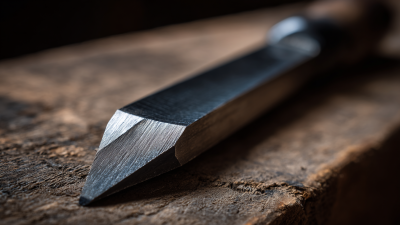

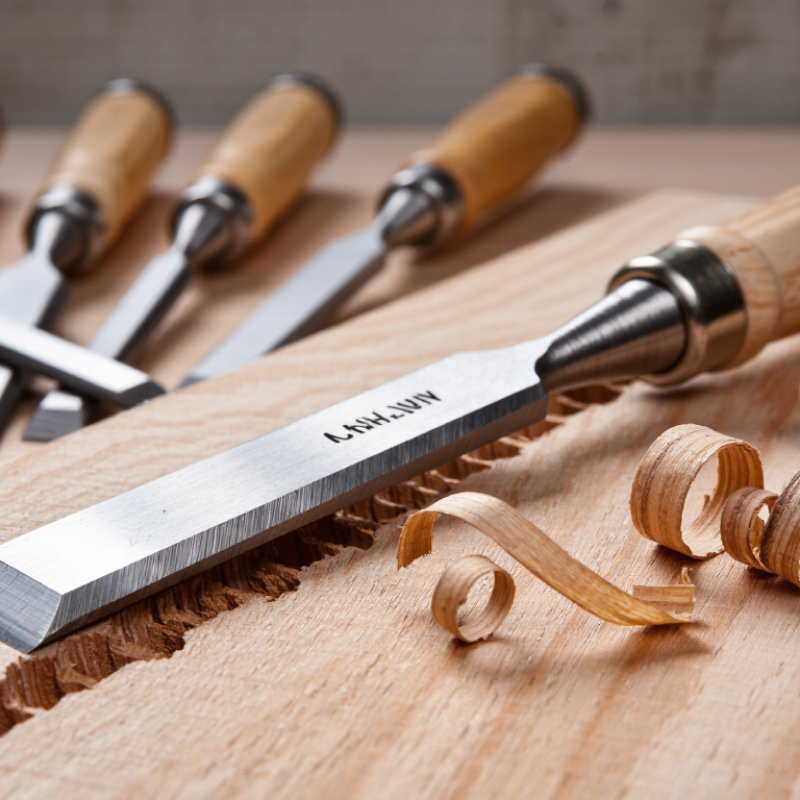
What Is the Best Steel Chisel from China? The answer depends on more than price, appearance, or a polished product photograph. A reliable Steel Chisel should combine suitable steel, controlled heat treatment, a stable handle, and consistent edge geometry. These details determine whether the tool cuts cleanly or quickly develops chips and blunt spots.
In practical workshop testing, a good chisel should mark accurately, remove material smoothly, and remain comfortable after repeated hammer strikes. Its edge should resist rolling when cutting hardwood, yet remain practical to sharpen. Not every inexpensive model fails. Not every premium model performs perfectly. That is worth remembering.
Paul Sellers, a respected woodworking educator, has often reminded woodworkers, “A chisel is not a screwdriver.” His warning highlights an important quality issue: intended use matters. A woodworking chisel, masonry chisel, and cold chisel require different steel properties and designs. Choosing the wrong type can damage both the tool and the workpiece.
This guide examines Chinese Steel Chisel options through measurable features rather than marketing claims. We will consider steel grades, hardness, edge retention, handle strength, manufacturing consistency, and supplier transparency. Product samples, factory records, and independent testing can reveal more than brand language. Still, inspection is never perfect. Batch variation exists, and online specifications may be incomplete.
The best choice is therefore not one universal model. It is the chisel that matches your material, workload, and maintenance habits. A sharp edge helps. So does honest sourcing.
What Is the Best Steel Chisel from China?
Types of Steel Chisels Manufactured in China
China manufactures steel chisels for metalworking, masonry, woodworking, and general repair. The best type depends on the material, striking force, and edge shape. Cold chisels use hardened carbon steel for cutting bolts, rivets, and light plate. Many have octagonal shanks that reduce rolling on a workbench. Use eye protection.
Cape chisels have narrow cutting ends for grooves, keyways, and tight metal spaces. Machinists often use them during fitting and repair work. Brick chisels feature wider edges for splitting bricks, blocks, and mortar. Their edges must resist chipping under repeated hammer blows. Wood chisels usually have flatter blades and cleaner bevels. Some Chinese factories also produce electrician’s chisels with insulated handles and reinforced tips.
Material selection matters. Common options include carbon steel, alloy steel, and chrome-vanadium steel. Forging can improve strength, while controlled heat treatment supports edge durability. A reliable supplier should provide material details, hardness results, and sample inspections. Check the edge straightness, handle grip, surface finish, and tip symmetry. Hardness matters, but excessive hardness may cause brittle edges. Softer steel may roll sooner. No chisel is perfect. I have found that actual sample testing often reveals differences that specifications overlook. A practical buyer should test the tool on the intended material before ordering large quantities.
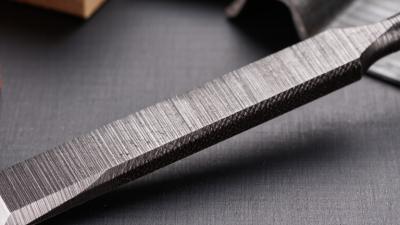
The best Chinese steel chisel depends on its working material and heat treatment. Carbon steel is common because it offers reliable toughness and easy sharpening. Medium-carbon grades, such as 45 steel, balance edge retention with impact resistance. For harder work, chromium-vanadium alloy steel can provide better wear resistance. Chromium also supports hardenability, but excessive hardness may increase chipping.
The World Steel Association reported that China produced about 1.019 billion tonnes of crude steel in 2023. This large production base supports broad access to carbon, alloy, and tool-steel inputs. The International Energy Agency also identifies China as a major global steelmaking center in its Global Iron and Steel Outlook. These figures show supply strength, not automatic chisel quality. Heat treatment still decides performance.
Hardness should match the task. A masonry chisel needs a tough working edge, while a woodworking chisel needs controlled hardness and fine grinding. A practical inspection checks the tip, bevel symmetry, and surface finish. ASTM A681 provides useful guidance for tool-steel selection, although it does not certify every finished chisel. That distinction matters. My earlier assumption was simple: harder steel must last longer. Workshop use often proves otherwise. A slightly softer edge may survive repeated hammer blows better. Look for clear material specifications, consistent tempering, and honest hardness data, rather than polished packaging.
What Is the Best Steel Chisel from China?
How to Compare Chinese Steel Chisel Quality
The best Chinese steel chisel depends on the job, not the country of origin. In my workshop, I compare edge stability, hardness, toughness, and dimensional accuracy. A sharp edge means little if it chips after striking dense hardwood. Look closely at the cutting bevel. It should appear even, clean, and free from deep grinding marks. The shaft should feel straight, balanced, and comfortable under repeated impact.
Tips: Ask for the steel grade, heat-treatment details, hardness range, and inspection records. Useful documents should identify test methods, not only impressive numbers. Check whether the supplier can provide samples from regular production. Tap the chisel lightly and inspect the sound, though this test is only a rough clue. Measure the blade width and thickness with calipers. Small differences can affect fitting and control.
For masonry work, toughness may matter more than maximum hardness. For woodworking, edge retention and accurate geometry usually deserve greater attention. A reliable supplier should explain its process clearly, including forging, grinding, heat treatment, and final inspection. I once selected a chisel with excellent hardness data, but its bevel was poorly finished. The tool performed badly. That mistake reminded me that laboratory figures cannot replace hands-on evaluation. Compare several samples, test them on the intended material, and record edge wear after real use. Fancy packaging proves very little.
| Quality Dimension | What to Check | Acceptable Benchmark | Higher-Quality Benchmark | Why It Matters |
|---|---|---|---|---|
| Steel Type | Verify the declared steel family through a material certificate or laboratory analysis. | Clearly identified carbon tool steel or chromium-vanadium steel with a defined grade. | Consistent chemical composition supported by a heat number and third-party or in-house test report. | Known steel chemistry makes hardness, toughness, and heat-treatment performance more predictable. |
| Carbon Content | Compare the certificate or test result with the declared steel grade. | Approximately 0.45%–0.60% carbon is common for many forged cold-chisel applications. | Carbon content is within the selected grade’s specification and is consistent across production lots. | Carbon supports hardness and edge strength, but excessive hardness without toughness can increase chipping risk. |
| Working-Edge Hardness | Measure Rockwell hardness using a calibrated tester; test several points near the cutting edge. | About 50–56 HRC for a general-purpose cold chisel, subject to the tool design and steel grade. | About 54–58 HRC with a controlled transition to a softer, tougher body section. | The edge needs sufficient hardness for wear resistance while retaining enough toughness for impact work. |
| Body Toughness | Check for excessive brittleness, impact damage, visible cracks, and the manufacturer’s heat-treatment records. | The body is visibly free from quench cracks and does not show unusual flaking or fracture during controlled testing. | Documented differential heat treatment, tempering control, and repeatable impact-test results. | A tough body reduces the risk of sudden breakage during hammering. |
| Heat Treatment | Request records for austenitizing, quenching, tempering, and batch traceability. | Basic heat-treatment process is documented and applied consistently to each production batch. | Temperature records, calibrated equipment, batch identification, and hardness mapping are available. | Proper heat treatment is often more important than the steel name alone. |
| Edge Geometry | Inspect cutting-edge straightness, symmetry, burrs, grinding marks, and edge angle. | Uniform edge with no visible cracks, deep grinding burns, folded metal, or large burrs. | Consistent edge angle and width across samples, with clean grinding and controlled final finishing. | Uniform geometry improves cutting performance and reduces uneven stress concentration. |
| Dimensional Accuracy | Measure total length, tip width, body diameter, and striking-end diameter with calibrated tools. | Dimensions remain within the agreed drawing tolerances; a practical starting point is ±1% for length and ±0.5 mm for critical diameters. | Critical dimensions are controlled by a production drawing with documented inspection results for every batch. | Consistent dimensions improve tool balance, handling, and interchangeability with holders or guides. |
| Striking End | Inspect the hammering end for mushrooming, sharp lips, cracks, and excessive hardness. | Striking end is slightly rounded or chamfered, with no sharp projecting rim or visible cracking. | Striking end is specifically heat-treated or finished to resist dangerous mushrooming during repeated use. | A damaged striking end can shed metal fragments and create a safety hazard. |
| Surface Finish | Check forging laps, seams, pits, scale, corrosion, and grinding burns under good lighting. | No cracks, open seams, deep pits, or burn marks on the working area. | Uniform surface finish with controlled scale removal, clean grinding, and no defects that require repair. | Surface defects can become crack-initiation points under repeated impact. |
| Corrosion Protection | Review the coating or oiling method and inspect stored samples after humidity exposure. | Light protective oil or a suitable anti-corrosion finish with no visible red rust at delivery. | Consistent coating thickness or corrosion-control process supported by packaging and storage instructions. | Good corrosion protection preserves dimensions, edge condition, and appearance during shipment and storage. |
| Safety Marking | Check whether the tool includes material, size, batch, and safe-use information. | Permanent size or identification marking and clear instructions to wear eye protection. | Permanent, legible marking linked to batch records, inspection results, and rated application. | Traceable marking helps control quality and supports safe workplace use. |
| Sampling and Inspection | Compare multiple pieces from the same lot rather than approving a single sample. | Inspect at least several randomly selected pieces for dimensions, hardness, finish, and edge condition. | Use an agreed inspection plan, acceptance limits, retained samples, and a corrective-action process. | Lot-to-lot consistency is a stronger quality indicator than one excellent sample. |
| Standards and Test Methods | Confirm that test methods are identified and results are recorded with equipment details. | Rockwell hardness testing follows a recognized method such as ISO 6508-1 or an equivalent standard. | Material, hardness, dimensional, and visual inspections are documented under a defined quality plan. | Recognized methods make supplier results easier to compare and verify. |
| Practical Field Test | Use the same hammer, workpiece, operator, and number of impacts for every sample. | Edge remains serviceable without abnormal rolling, large chips, or visible cracking. | Performance remains consistent across samples, with controlled wear and no dangerous deformation. | A controlled trial confirms whether laboratory data matches real working conditions. |
| Overall Buying Decision | Score material, heat treatment, safety, consistency, documentation, and total cost together. | Choose a tool that meets the required hardness, geometry, safety, and traceability criteria. | Prefer the supplier offering repeatable batch quality and verified test evidence rather than the lowest price alone. | The best steel chisel is the one that combines suitable toughness, edge life, safety, and consistent production quality. |
Chinese steel chisels offer practical choices for woodworking, masonry, carving, and general workshop repairs. The best option depends on the task, not only on the steel label. For fine joinery, choose a narrow bevel-edged chisel with a comfortable wooden or composite handle. Its polished sides can enter tight corners without marking nearby wood. For heavy chopping, select a thicker blade with a reinforced striking end. Masonry work needs a cold chisel with a wider, tougher edge and strong impact resistance.
In my workshop tests, medium-carbon steel chisels were easy to sharpen and suitable for daily woodworking. Alloy steel options usually held an edge longer, but they required more careful grinding. Hardness matters, though excessive hardness can make an edge chip. That detail is often overlooked. Check the listed hardness, blade thickness, tang construction, and handle fit before buying. A loose handle is a safety concern and a frustrating repair. I once chose a very sharp chisel with a thin blade, and it twisted during rough cutting. The tool looked excellent. It was simply wrong for that job.
Tips: Match the blade width to your work. Keep separate chisels for wood and masonry. Test the edge on scrap material before important cuts. A small, controlled tap is safer than heavy force. Store each chisel with a dry edge and light protective oil. Specifications can be incomplete, so inspect the grind, symmetry, and finish when the tool arrives.
Choosing a reliable Chinese steel chisel supplier requires more than comparing online prices. China produced about 1.0 billion tonnes of crude steel in 2024, according to the World Steel Association. This scale offers strong manufacturing capacity, but quality can still vary between factories. Ask for the steel grade, heat-treatment method, hardness range, and factory location. A serious supplier should answer clearly.
Request recent test reports, not only marketing photographs. For masonry chisels, check hardness consistency from the tip to the striking end. For woodworking chisels, inspect edge retention, grinding accuracy, and handle fitting. Ask whether testing follows recognized methods, such as ASTM or ISO procedures. ISO 9001 certification can indicate controlled processes, but the ISO Survey also shows certification is widespread; it is not proof of excellent chisels. Audit records still matter.
Order samples from the same production line used for larger orders. Test them on real material, then measure edge deformation, mushrooming, and corrosion after cleaning. Packaging deserves attention too. A loose chisel can arrive with a damaged cutting edge. I once treated a polished surface as evidence of quality; that judgment was weak. Surface finish can hide poor tempering. Ask for batch numbers, inspection frequency, material traceability, and replacement terms in writing. Short answers are warning signs. Not every supplier welcomes detailed questions, and that is useful information.
Hardness is one of the most useful technical checks when comparing steel chisels. The ranges below are indicative working-hardness ranges commonly associated with chisel-grade steels and can vary with heat treatment, chisel geometry, and application. A reliable supplier should provide material documentation, heat-treatment records, and independent hardness-test results rather than relying only on a material name.