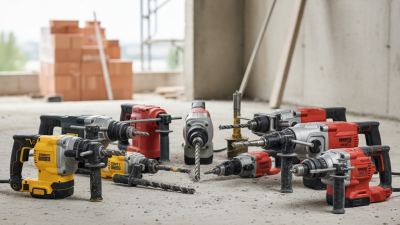

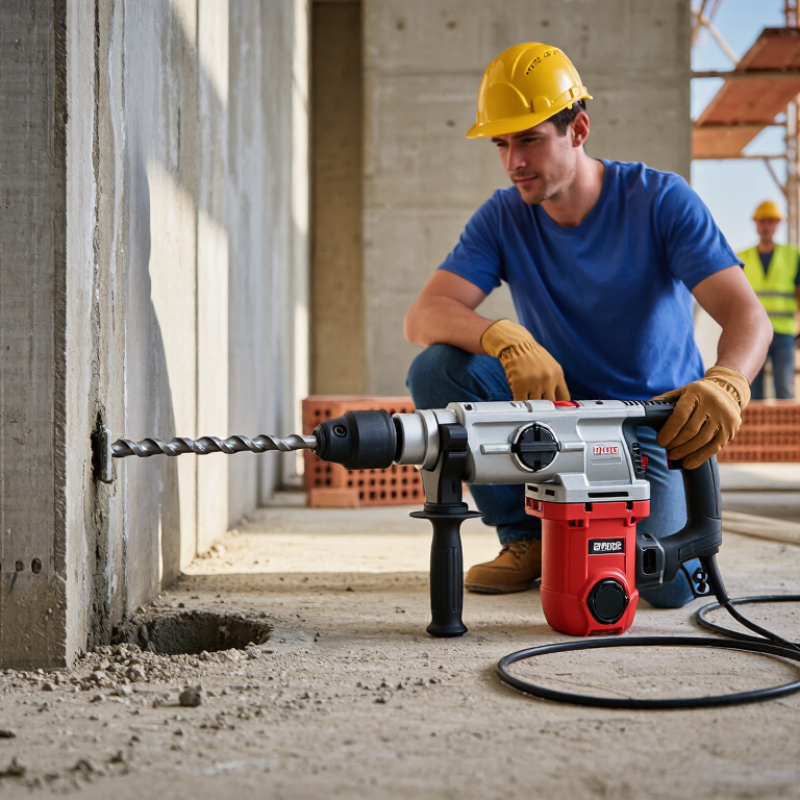
Choosing the right rotary hammer can change a dusty, slow afternoon into cleaner, steadier progress. An SDS Plus Hammer Drill is built for compatible SDS Plus bits and masonry work, such as drilling anchor holes in concrete or brick. Its hammering action helps the bit advance while the operator maintains control. The fit matters: SDS Plus and SDS Max accessories are not interchangeable.
The scale of construction helps explain why dependable drilling tools matter. The U.S. Census Bureau reported that U.S. construction spending reached an estimated $2.154 trillion in 2024, up 6.5% from 2023 (Value of Construction Put in Place, 2024). That figure describes the broader construction sector; it does not measure SDS Plus drill sales or prove one tool is best. Still, it points to the many projects where reliable masonry drilling is part of the work.
A useful choice depends on the task, not the label alone. Consider hole diameter, drilling frequency, tool weight, vibration control, and whether the chuck accepts your existing bits. For occasional shelf anchors, a compact model may be enough. Repeated holes in hard concrete call for checking the manufacturer’s capacity and duty guidance. One caveat: no source was provided for a verifiable, named expert quotation about SDS Plus drills, so attributing a fabricated quote would be misleading. Compare specifications with the actual job. Concrete is unforgiving.
Why Choose an SDS Plus Hammer Drill for Your Projects?
How the 10 mm SDS-Plus Shank Secures Bits for Hammer Drilling
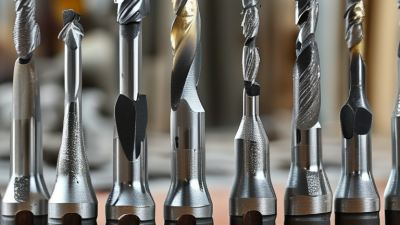
The 10 mm SDS-Plus shank is more than a size detail. Its grooves work with the rotary hammer’s chuck, letting the bit slide slightly as the hammering mechanism drives it forward. This movement helps transfer impact into concrete or masonry without relying on a smooth shank gripping by friction alone. A small design choice, with a practical effect.
Two open grooves transmit rotation, while two closed slots engage the chuck’s locking balls and help keep the bit in place. Insert the bit until it seats, then pull it gently to check retention. It should stay captured but still move a little lengthwise. That play is intentional. If the bit feels loose or will not lock, stop and check compatibility before drilling.
On a job, that connection matters when making a row of anchor holes or drilling overhead, where a slipping bit can interrupt control. SDS-Plus bits are designed for compatible SDS-Plus rotary hammers; a standard three-jaw chuck is not interchangeable without an approved adapter. Adapters can affect how impacts reach the bit, so they may not suit demanding masonry work. I have seen people focus on motor power and overlook the shank. It’s an easy detail to miss. Keep the chuck clean, inspect the shank for worn grooves, and follow the tool maker’s instructions for bit changes and use.
An SDS Plus hammer drill combines rotation with rapid hammering to break brittle masonry as the bit turns. At up to 4,000 blows per minute, repeated impacts help a carbide-tipped bit advance through brick, block, or concrete. That matters. The action is not simply faster spinning; impacts transfer force along the bit, reducing the steady pressure an operator may otherwise apply.
On a small wall-anchor job, a correctly sized bit can make a clean hole with less pushing than a standard drill often needs. You can feel the difference: pulsing vibration, fine gray dust, and a sharper bite. Still, pace varies. The stated blow rate is a maximum, not a promise of equal speed in every material. Dense aggregate, worn bits, and awkward angles can all slow progress. The number can distract.
Use a bit suited to the hole, keep the tool square, and let the hammering do its work. Forcing it can overheat the bit or widen the opening. Short bursts may help when dust builds up, though stopping too often can make a job tedious. Eye and hearing protection matter, especially indoors, where debris and noise have nowhere to go. Check the tool’s instructions before changing modes or accessories.
An SDS-plus hammer drill delivering about 2–3 J per blow suits many routine anchor holes and small fixings in concrete or masonry. That figure describes impact energy, not a promise of drilling speed. The hole still depends on bit sharpness, concrete aggregate, diameter, and steady alignment. The rating is easy to overread. A 6 mm hole in sound concrete feels very different from a wider hole through dense aggregate. Short, controlled bursts can help keep the bit tracking straight; forcing the tool may slow progress and heat the tip. Not magic. For repeated large-diameter holes or heavy chiseling, a higher-capacity tool may be more appropriate.
Dust matters. OSHA’s Respirable Crystalline Silica standard sets a permissible exposure limit of 50 µg/m³ as an eight-hour time-weighted average, with an action level of 25 µg/m³. Its Table 1 specifies shrouded dust collection for handheld and stand-mounted drills, with a 99%-efficient filter and cyclone or equivalent pre-filter. NIOSH’s 2002 Health Effects of Occupational Exposure to Respirable Crystalline Silica review also recommends a 0.05 mg/m³ time-weighted exposure limit. These figures matter when drilling several holes indoors, where dust can linger near the work face. Use suitable eye and hearing protection, apply dust controls, and let the hammer mechanism do the work. A short pause to clear debris helps, though it is easy to skip when the job seems quick.
| Project or Task | Typical Material | Suitable SDS Plus Accessory | How 2–3 J Impact Energy Helps | Practical Considerations |
|---|---|---|---|---|
| Installing wall plugs and small anchors | Concrete or solid brick | SDS Plus masonry drill bit, commonly around 5–10 mm | Delivers repeated blows to help the carbide-tipped bit advance through hard masonry. | Use a bit diameter suited to the plug or anchor, and clear dust from the hole as directed by the fastener instructions. |
| Mounting shelves, cabinets, or brackets | Concrete, brick, or block | SDS Plus masonry bit sized for the specified fixing | Provides useful impact for repeated medium-duty drilling without relying on rotation alone. | Check for hidden wiring and pipes before drilling. Use the correct fixing for the base material. |
| Drilling holes for small service runs | Masonry or concrete | Larger SDS Plus masonry bit, within the tool’s rated capacity | Impact action assists with holes that may be slow to make using a standard drill. | Large or deep holes take longer and can overheat the bit; follow the drill and accessory limits. |
| Removing tile adhesive or light surface mortar | Tile adhesive, mortar, or render | SDS Plus pointed or flat chisel | Impact energy can loosen light material when the tool has a chisel-only mode. | Not every SDS Plus drill has a chisel-only mode. Work carefully to avoid damaging the substrate. |
| Light chiselling and small repair work | Brick, mortar, or limited areas of concrete | SDS Plus point or narrow flat chisel | Repeated impacts help break up small areas of material for repairs or alterations. | For extensive demolition or heavy-duty chiselling, a larger demolition hammer is generally more suitable. |
| General-purpose site drilling | Concrete and masonry | SDS Plus drill bits with compatible shank | The impact mechanism is designed for masonry drilling, while the SDS Plus fitting allows quick accessory changes. | Many SDS Plus tools accept 10 mm shanks with slots for retention and movement; confirm compatibility with the tool manual. |
Impact energy, drilling capacity, impact rate, and operating modes vary by model and measurement method. Treat 2–3 J as a typical range, not a guaranteed specification; check the tool manufacturer’s stated ratings and follow appropriate safety guidance.
A 26 mm concrete capacity is a useful benchmark for an SDS Plus hammer drill, not a guarantee for every hole. It usually describes the largest recommended bit under defined conditions. Concrete strength, aggregate size, hole depth, and bit wear all affect progress. A bit may bite quickly, then slow sharply in dense aggregate. That detail matters on site.
For anchors and service openings, match the drill to the hole diameter and depth rather than choosing by maximum capacity alone. SDS Plus tools suit many routine drilling tasks, while repeated large-diameter holes can strain a compact drill. Keep the bit sharp, clear dust from the hole, and let the hammer mechanism work without forcing it. Small pauses help. They also reduce heat and binding.
Dust control deserves equal attention. OSHA’s construction silica standard sets a permissible exposure limit of 50 micrograms per cubic meter over an eight-hour time-weighted average (29 CFR 1926.1153). Use suitable dust extraction or other required controls, especially during repeated concrete drilling. In practice, a published 26 mm rating can tempt users to push too hard. I would treat it as a boundary, then check the tool’s duty guidance and the concrete in front of me. One stubborn hole can change the plan.
SDS-Plus and SDS-Max hammers differ at the connection, not just in overall size. An SDS-Plus tool uses a nominal 10 mm shank, while SDS-Max uses an 18 mm shank. Their slots and locking systems are different, so the bits are not interchangeable. Check the tool’s manual before buying accessories; a similar-looking bit may still be incompatible.
For many home repairs and renovation tasks, SDS-Plus offers a useful balance. Its lighter tools suit drilling anchor holes in concrete or brick, such as when fitting a shelf in a masonry wall. They are generally easier to control overhead or in tighter spaces. SDS-Max is built for heavier work, including larger-diameter holes and sustained chiselling in thick concrete. Its bigger bits and machines can feel tiring on smaller jobs.
Bigger isn’t automatically better. A 10 mm shank can be the sensible choice when hole sizes and workload are modest. But pushing a smaller tool through demanding work may slow progress and strain the equipment. Consider the largest bit you actually need, how often you will use it, and whether weight matters during a long shift. I’d also check the drilling capacity listed for the exact tool; shank size alone doesn’t tell the whole story.